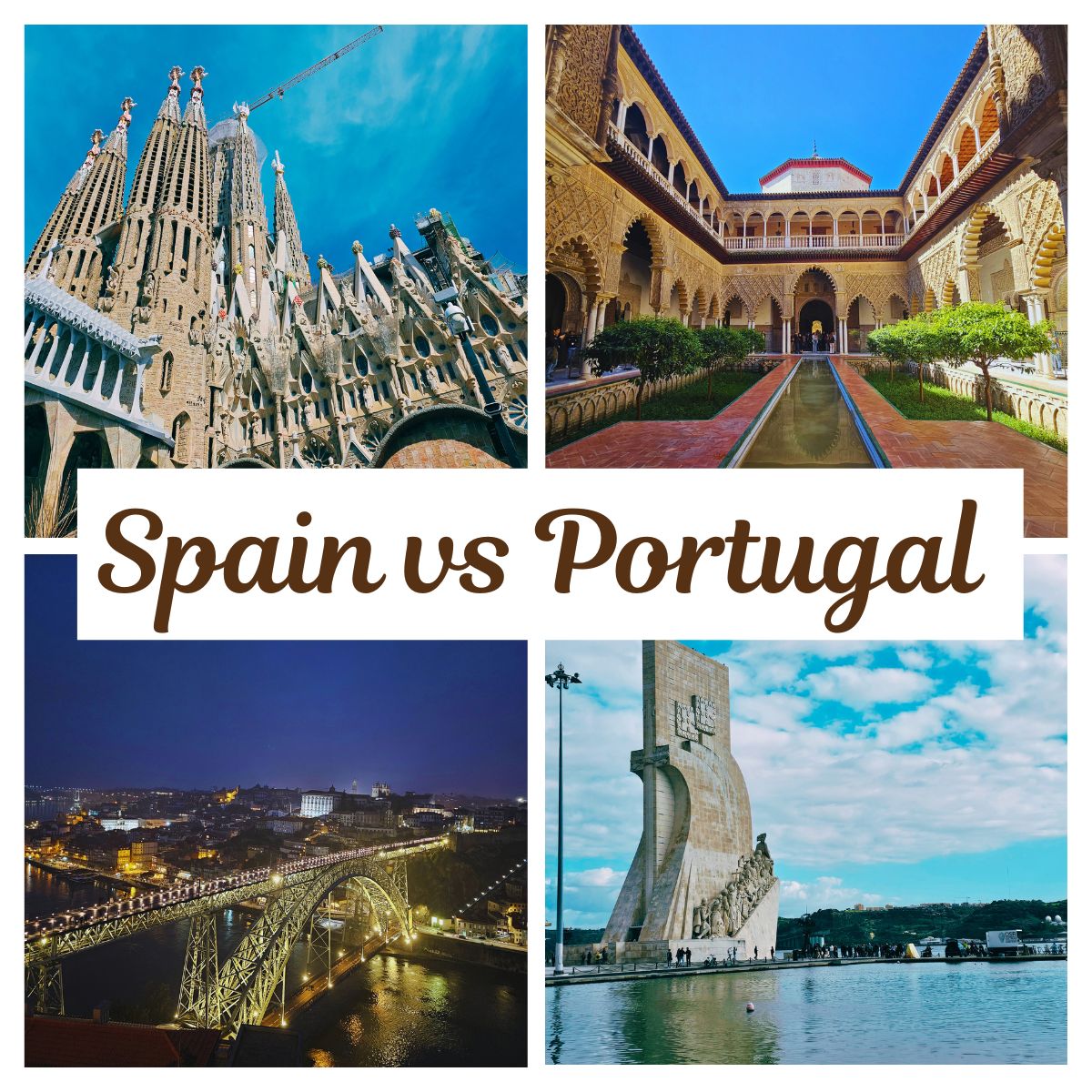
Spain vs Portugal: 6 Surprising Differences We Noticed on Our 14-Day Trip
Disclosure: This post contains affiliate links. If you make a purchase through them, I may earn a small commission at no extra cost to you. I only recommend tools we actually used on our 14-day trip!
Keer and I embarked on a 14-day trip to Spain and Portugal, expecting the two neighbouring countries to feel similar.
However, while we followed our Ultimate 14-Day Spain and Portugal Itinerary, we quickly realized how distinct each country was — from the city layouts to the ticket booking experiences.
While a quick glance shows they are different, the real surprises were in the small details—like why we had to book tickets for Spain months in advance while Portugal was much more spontaneous. Below is a quick breakdown of what we found, but keep reading for the specific ‘hacks’ we used to navigate each country!
Spain vs. Portugal Comparison Table
| Feature | Portugal 🇵🇹 | Spain 🇪🇸 |
| English Spoken | Widely used; very common in cities | Less common; knowing Spanish is crucial |
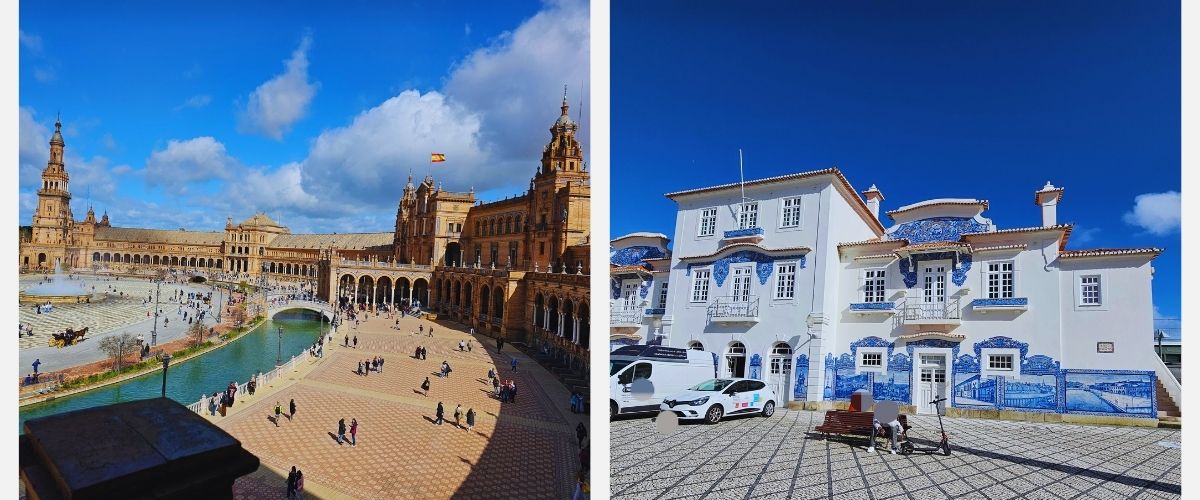
| City Layout | Narrow, intimate roads with tilework | Wide, grand, and stately boulevards |
| Budget | Very affordable (Cabs, food, & stays) | Noticeably pricier |
| Booking | Spontaneous; same-day often okay | Must book major spots 2 months ahead |
| People & Service | Warm, approachable, and cheerful | More reserved; signs of tourist fatigue |
| Overall Energy | Relaxed, intimate, and easy-going | Energetic, grand, and bustling |
Language & Communication: Is English Widely Spoken?
Before the trip, I used Duolingo to learn a few words of Portuguese, which definitely helped with understanding menus and everyday phrases. In Portugal, whether in larger cities or smaller ones like Aveiro, English was commonly spoken, and language was never an issue.
Spain, however, was different. The more Spanish you know, the better. Most people spoke only Spanish, so it was crucial to know the basics.
City Layout & Architecture: Narrow Streets vs. Grand Boulevards
During our 14-day trip, we explored Portugal first, followed by Spain. As soon as our bus from Faro entered Spain, we immediately felt the shift.
Portugal: Roads were narrow and intimate, often adorned with beautiful tilework. The houses felt cozy and homely.
Spain: Wide roads and grand boulevards gave a more expansive, stately, and imposing feel.
Cost of Travel: Is Portugal Cheaper Than Spain?
Travel in Portugal felt much more budget-friendly compared to Spain. For example, a cab ride from Porto Airport to the Ribera cost around 14 Euros for 21 km, while a cab ride from Granada Cathedral to the Granada Airport was about 30 Euros for 18 km. Accommodation and food were also more economical in Portugal, making it a great choice for travellers on a budget, while Spain was noticeably pricier in comparison.
Ticket Availability: The Secret to Booking Attractions in Spain
In Portugal, getting tickets to attractions was easy—we often booked them on the same day without any hassle. Spain, on the other hand, was a different story. Tickets on official sites were often sold out, and buying from third-party vendors was ridiculously expensive. To navigate this, we relied on our 15 essential travel apps to find tickets. For example, when the official site was full, we used Trip.com to snag last-minute tickets for the Sagrada Familia—it was a lifesaver!
PRO TIP
If you’re planning to visit popular spots in Spain, book at least two months in advance to avoid “sold out” signs or expensive third-party vendors.
Locals & First Impressions: Warmth vs. Tourist Fatigue
People in Portugal felt very approachable and welcoming. From the immigration officer to waitstaff at restaurants, everyone we interacted with was warm, accommodating, and often cheerful. In Spain, our experience was more mixed. Some locals came across as reserved and not particularly open to tourists—perhaps a sign of tourist fatigue. That said, there were lovely exceptions, like our kind Airbnb host in Seville who took the time to explain things to us in great detail.
Overall Vibe & Atmosphere: Relaxed Intimacy vs. Vibrant Energy
Each place we visited had its own distinct feel. In Portugal, cities like Porto, Aveiro, and Lagos felt relaxed, intimate, and easy-going. Lisbon was an exception—more vibrant and bustling, with long queues at popular tourist spots. Spain, on the other hand, had a consistently grand and lively vibe across all cities we visited—whether it was Seville, Granada, or Barcelona. Everywhere in Spain felt energetic and full of tourists, adding to the city’s dynamic atmosphere.
Conclusion
Both Spain and Portugal have their own unique charm. For budget travellers, Portugal may be the better pick—with more affordable transport, accommodation, and attraction tickets. It’s also ideal for those seeking a slower-paced, relaxed vacation. Spain, on the other hand, is perfect for travellers who love energy, grandeur, and vibrant city life. If you ask us—and if you have the time—we definitely recommend visiting both. We’re so glad we did, and experiencing both countries made the trip even more memorable.
If you’re travelling vegetarian in the region, check out our tips to stay veggie on the Iberian peninsula to avoid common pitfalls.