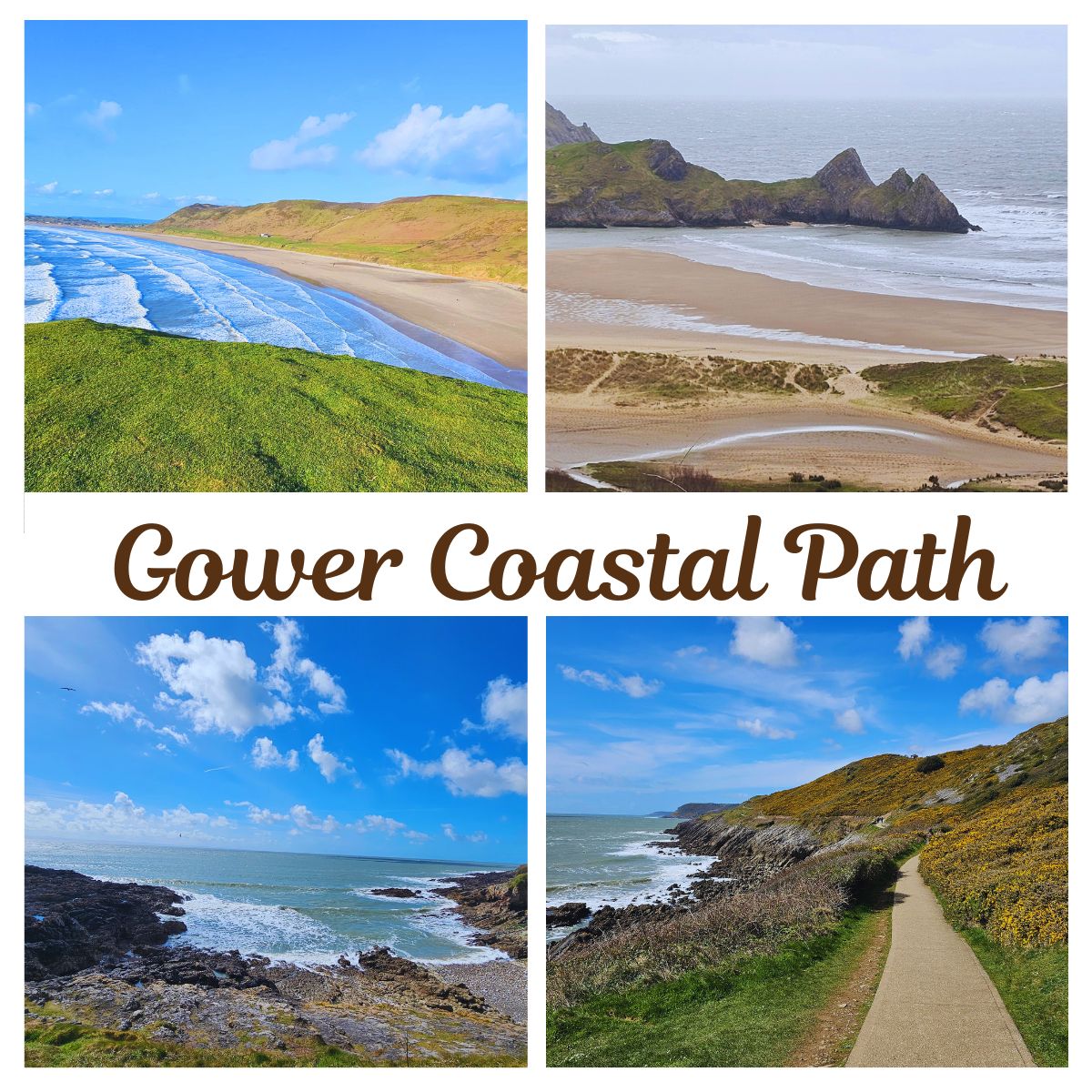
21,000 Steps of Blue: The Ultimate Guide to the Gower Coastal Path
If you are looking for a trip that combines “otherworldly” landscapes, dramatic cliffs, and a touch of local magic, the walk from Swansea to the Gower Peninsula is unbeatable. After a four-day adventure, this coastal stretch became my new favourite—and it’s likely to become yours too.
From navigating dramatic cliffside paths and hidden caves to standing before the perfect crescent of Rhossili Bay, here is everything you need to know for your own journey along the Welsh coast.
The Journey Begins: Swansea to Limeslade Bay
Our 21,000-step adventure started at the edge of the city, where the urban landscape quickly gives way to the rugged beauty of the Gower Peninsula.
The Easter Bus Surprise: How to Travel for Free
Your journey can start in Swansea town centre with a bit of “traveler’s luck.” When we headed for Bracelet Bay, we stumbled upon a major tip for your spring visit: the Swansea Council free bus scheme.
You might be as pleasantly surprised as we were—our bus on April 5th cost us exactly £0. It’s a fantastic initiative that makes exploring the coast incredibly easy and budget-friendly for you.
How to catch the free ride:
The scheme typically runs for about eight days around the Easter holidays. To save your cash for a nice coastal coffee later, look for free travel during:
- The long Easter weekend (Good Friday through Easter Monday)
- The full weekend before Easter
- The full weekend after Easter
Plan your timing: Always check the Swansea Council website to confirm the exact dates for your trip, as they can change slightly each year!
🚌 More Car-Free Adventures
If you love exploring Wales without a car, check out my Guide to Penarth and Barry Island next!
From Lighthouse to Gorse-Covered Cliffs
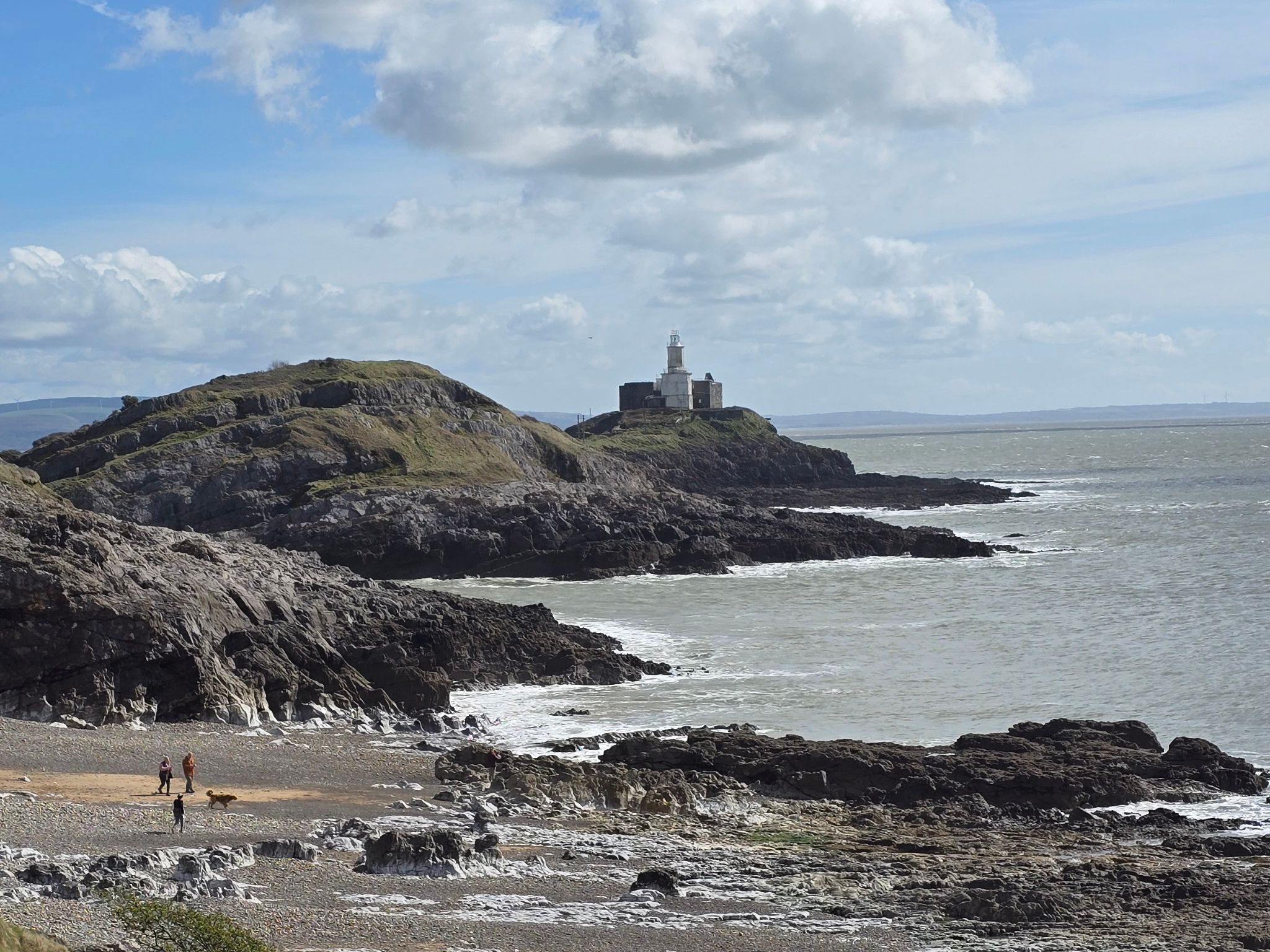
Upon arriving at Bracelet Bay, the lighthouse perched on its rocky island immediately catches your eye—it’s the perfect first photo op.
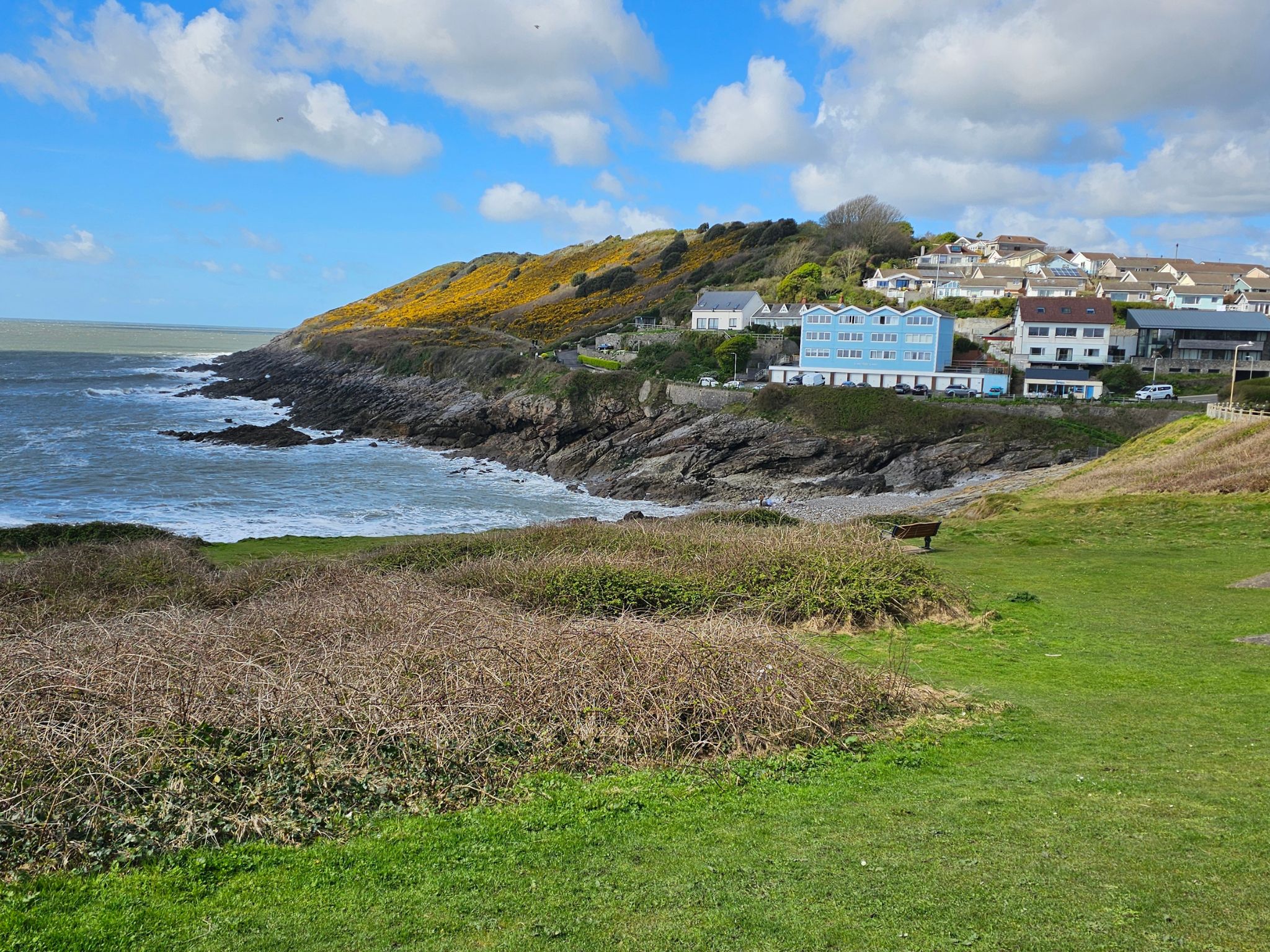
From here, we began our walk toward Limeslade Bay. While the very first section follows the road, don’t let that fool you; the path quickly transitions right onto the cliff edge. Keep an eye out as you approach Limeslade: you’ll see a striking blue building on your right. Set against a backdrop of rugged cliffs draped in vibrant yellow gorse, it is a truly stunning sight and marks the official start of the wilder, cliffside portion of the trek.
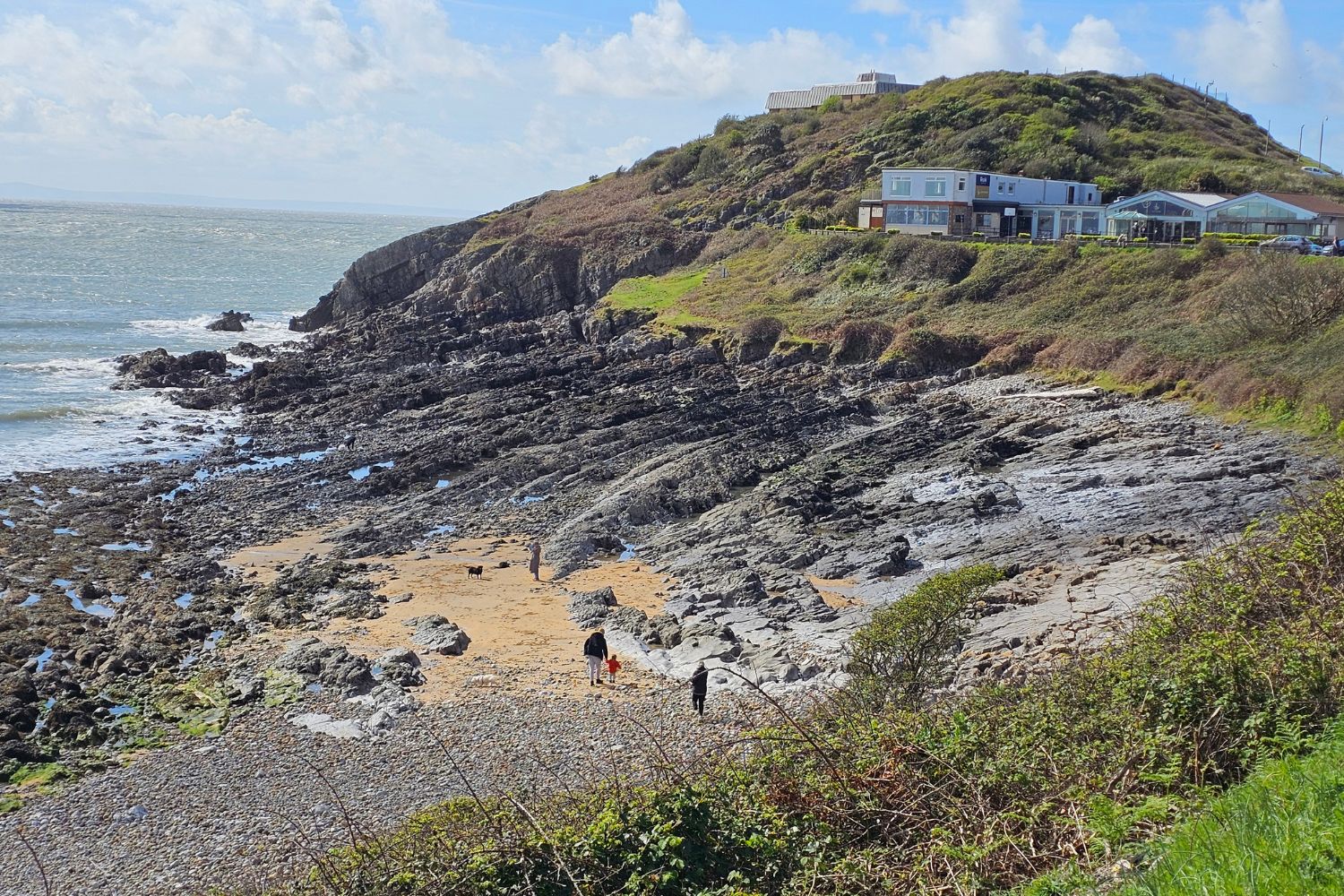
Planning a pitstop?
- Parking: There is a convenient car park tucked between Bracelet and Limeslade bays.
- Fuel Up: Stop at the cozy café at Limeslade to grab a coffee now—once you move past this point, the path leaves the road entirely, and it’s just you and the coast.
Decoding the Coast: The Path to Langland Bay
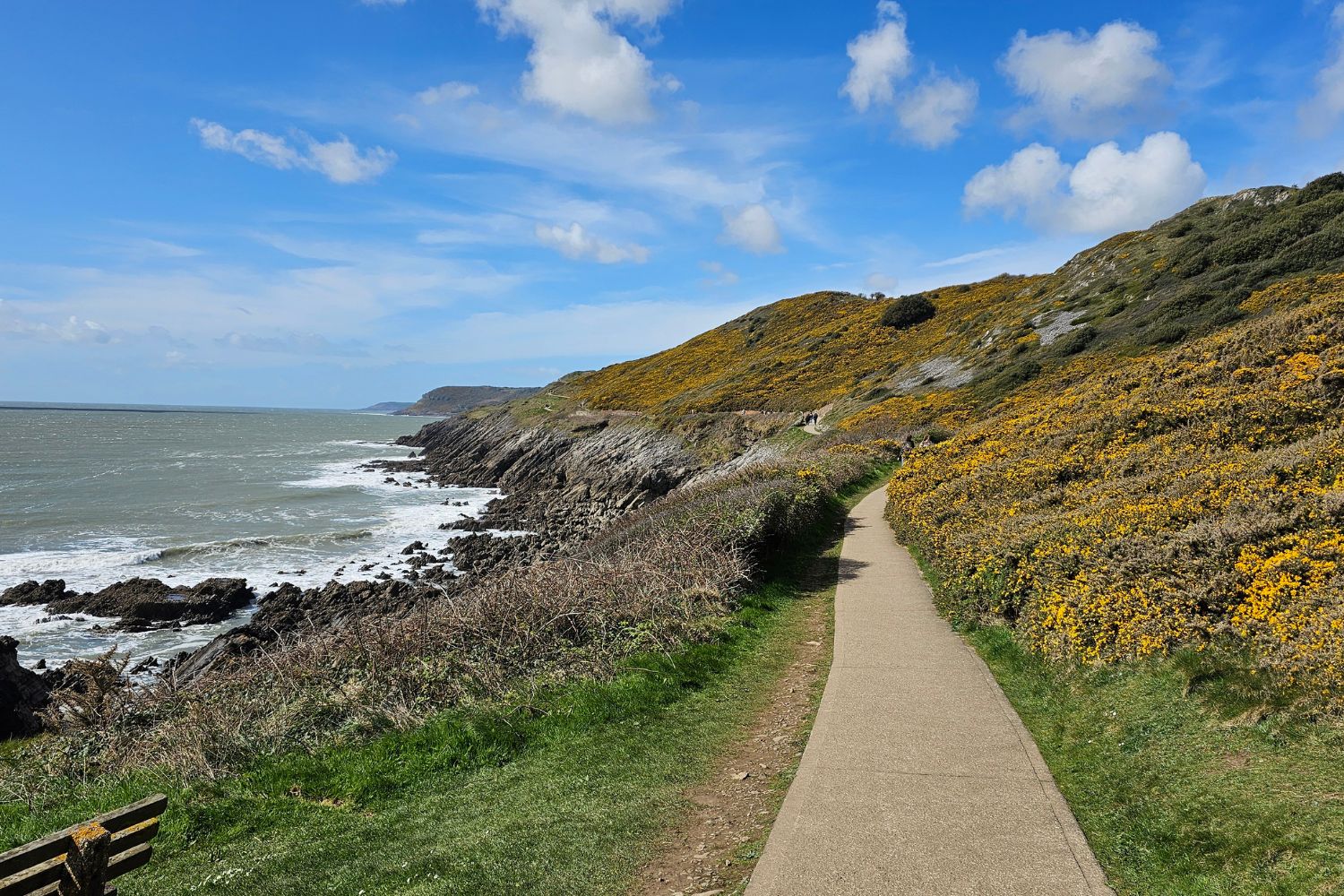
Once you leave the rugged, rocky cove of Limeslade Bay, the path opens up, offering sweeping views of the Bristol Channel as you head toward Langland.
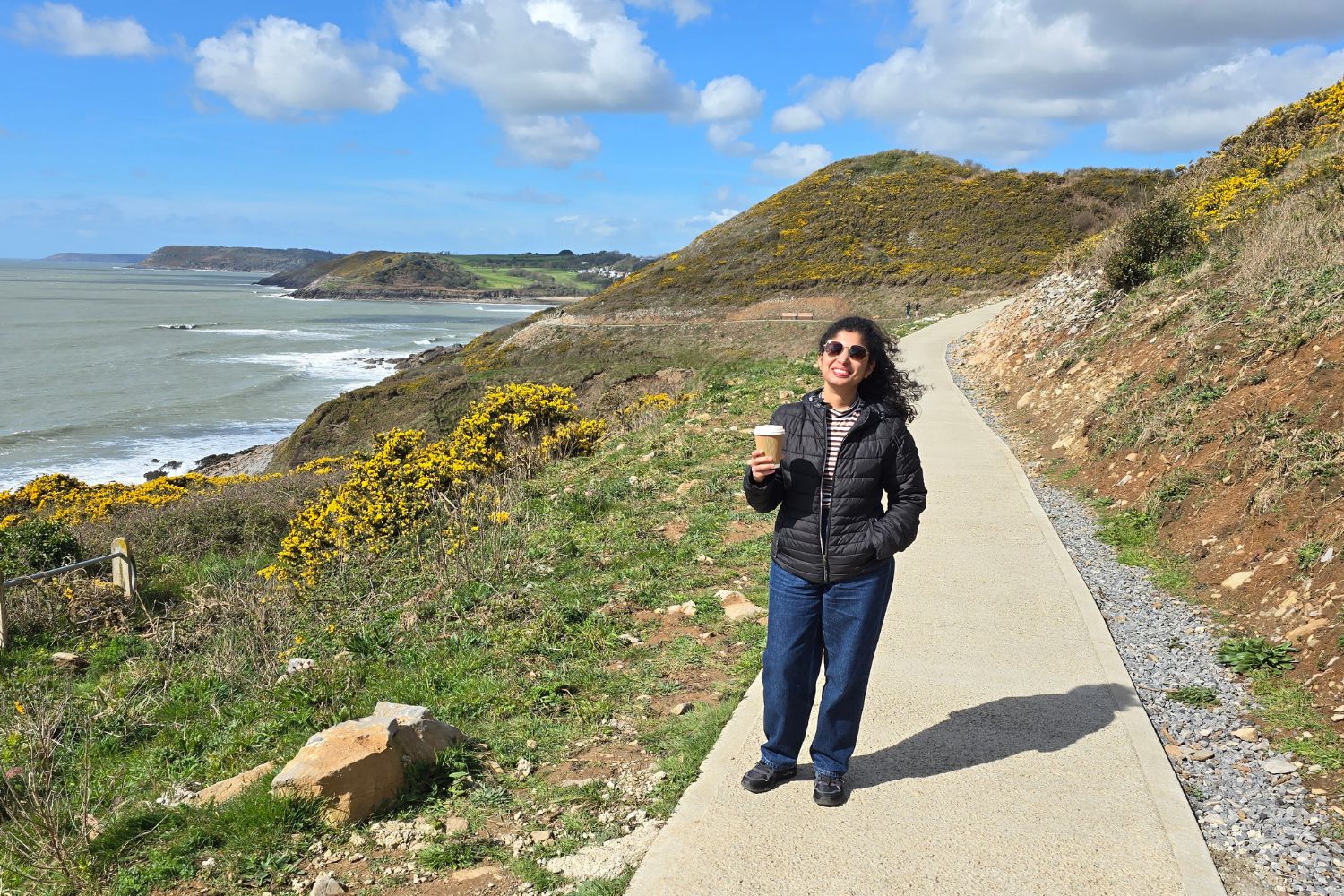
As you move onto the cliffside, the scenery transforms: you’ll have vibrant gorse-covered cliffs to your right and the churning blue sea to your left.
The Mystery of the “Snail” Symbols
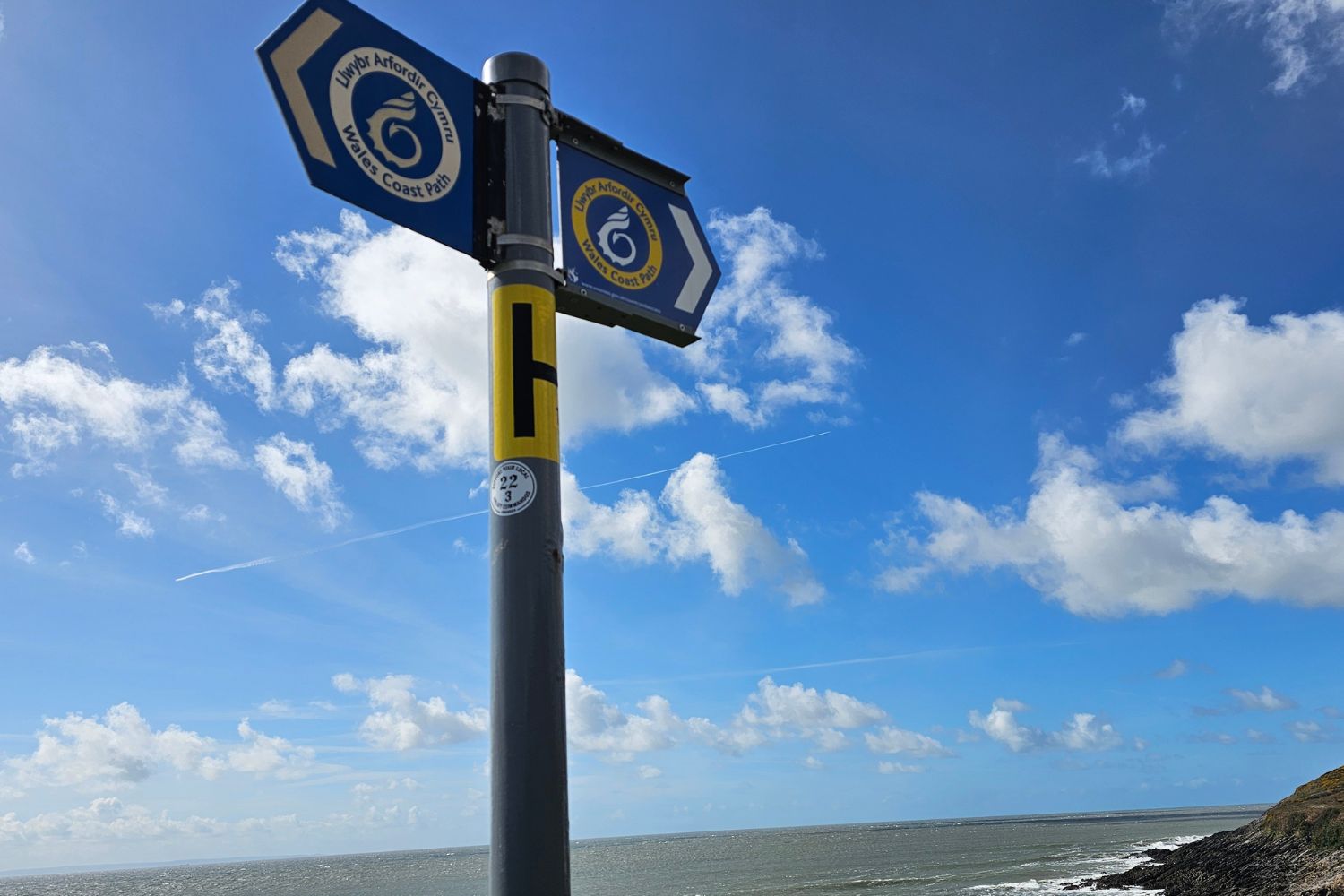
You’ll notice the Wales Coast Path is exceptionally well-signposted here, but the symbols are a bit unusual—you need to look for the snails.
At first glance, they look like little snails, but they are actually nautilus shells—the official emblem of the Wales Coast Path.
Here is the “Snail Code” you’ll want to remember:
- The Blue Shell: This marks your standard, reliable route.
- The Red Shell: Keep an eye out for these as you near Caswell. They signify the high-tide alternative.
It’s a small but vital detail; if the waves are crashing close to the rocks, the red snail will guide you to the safer, elevated path.
Accessibility and the Surfer Bench
You’ll find this stretch of the path impressively accessible. For the first 3/4th of the way, the surface is well-paved and level, making it suitable for strollers or wheelchair users. While you might notice that railings only appear at the steepest, windiest bends, the lack of barriers elsewhere means your views of the horizon remain completely uninterrupted and majestic.
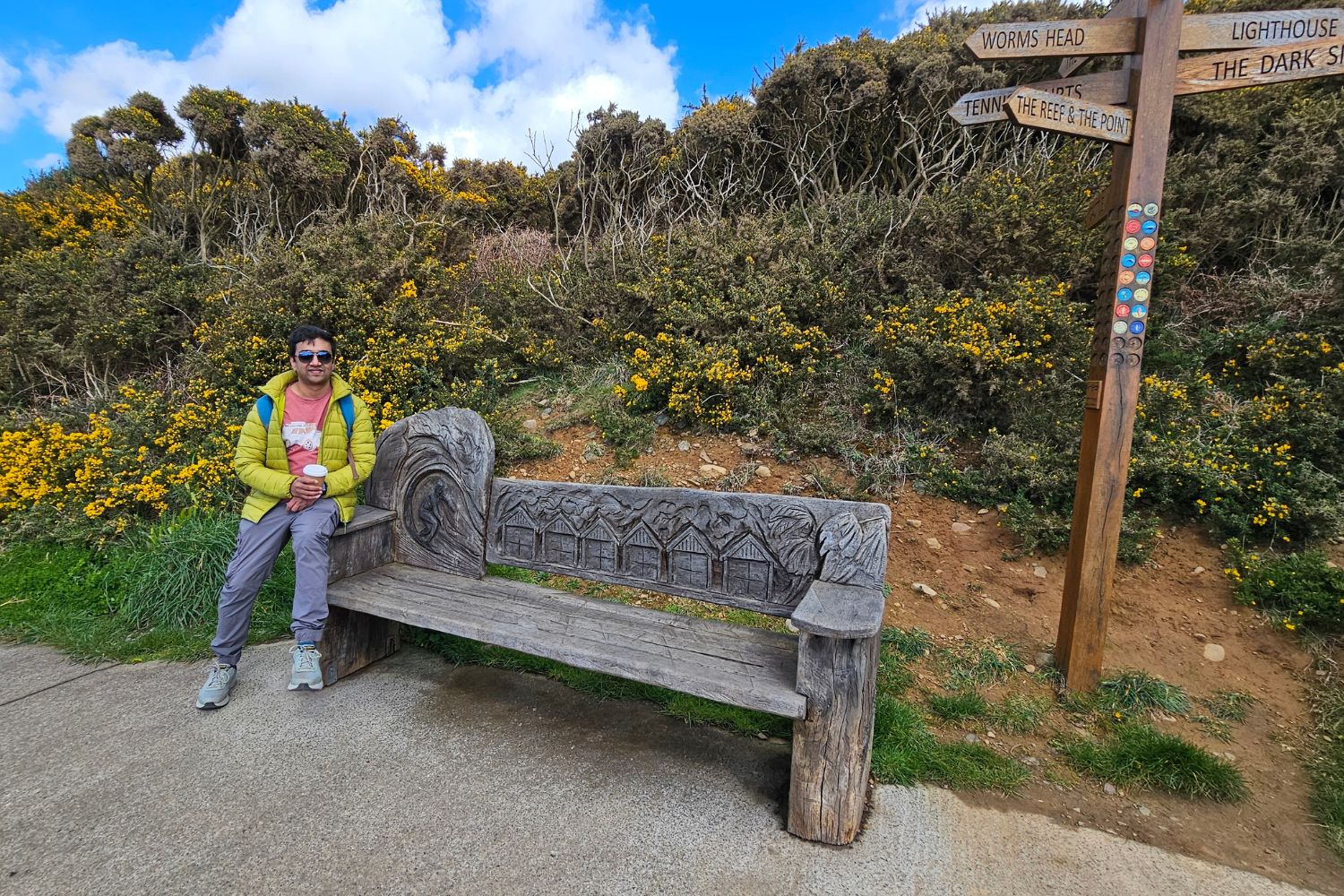
Don’t miss this: About a mile in, keep your eyes peeled for a unique wooden bench. It’s intricately etched with a surfer and beach houses. It is, without a doubt, the best seat on the coast for you to stop and watch the surfers catching waves near Langland Bay.
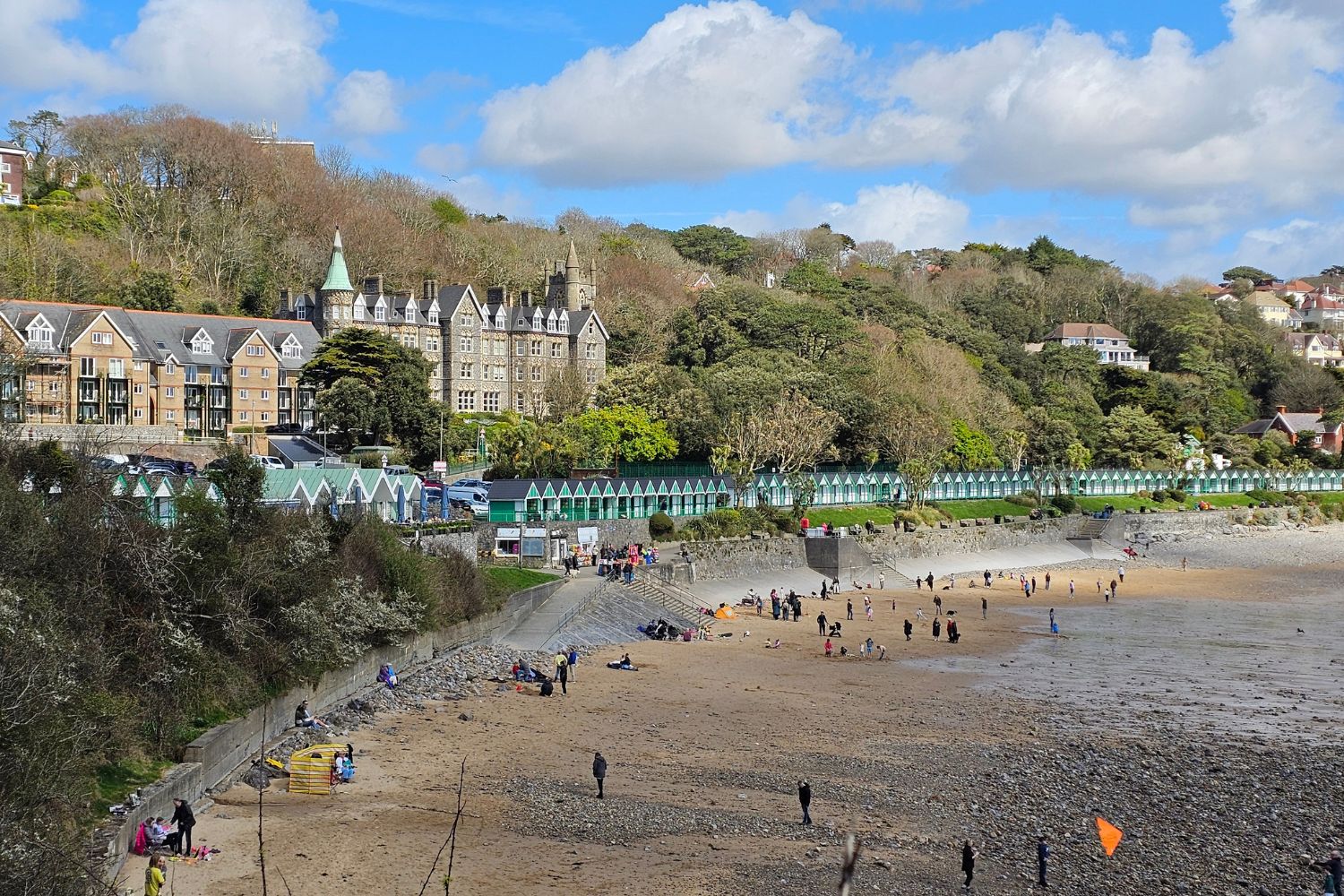
Coastal Gems: Langland to Caswell Bay
The rugged cliff path eventually softens as you descend into Langland, a bay that feels a bit more refined and full of character.
The Architecture of Nature at Langland
You’ll find Langland Bay to be one of the most visually striking spots on the coast. It is famous for its iconic green-and-white beach huts and the turreted Langland Manor, which stands majestically in the background like something out of a fairy tale.
The beach itself offers a bit of everything—wide sandy stretches mixed with distinct pebbly and rocky areas.
Where to Refuel
If you are looking for a break, there is a local café here where you can grab a coffee or lunch before continuing. After a quick stop at the facilities, I highly recommend you head to Snaple Point. It’s a viewpoint equipped with benches that offer some of the best panoramic views of the bay and the rugged shoreline stretching out before you.
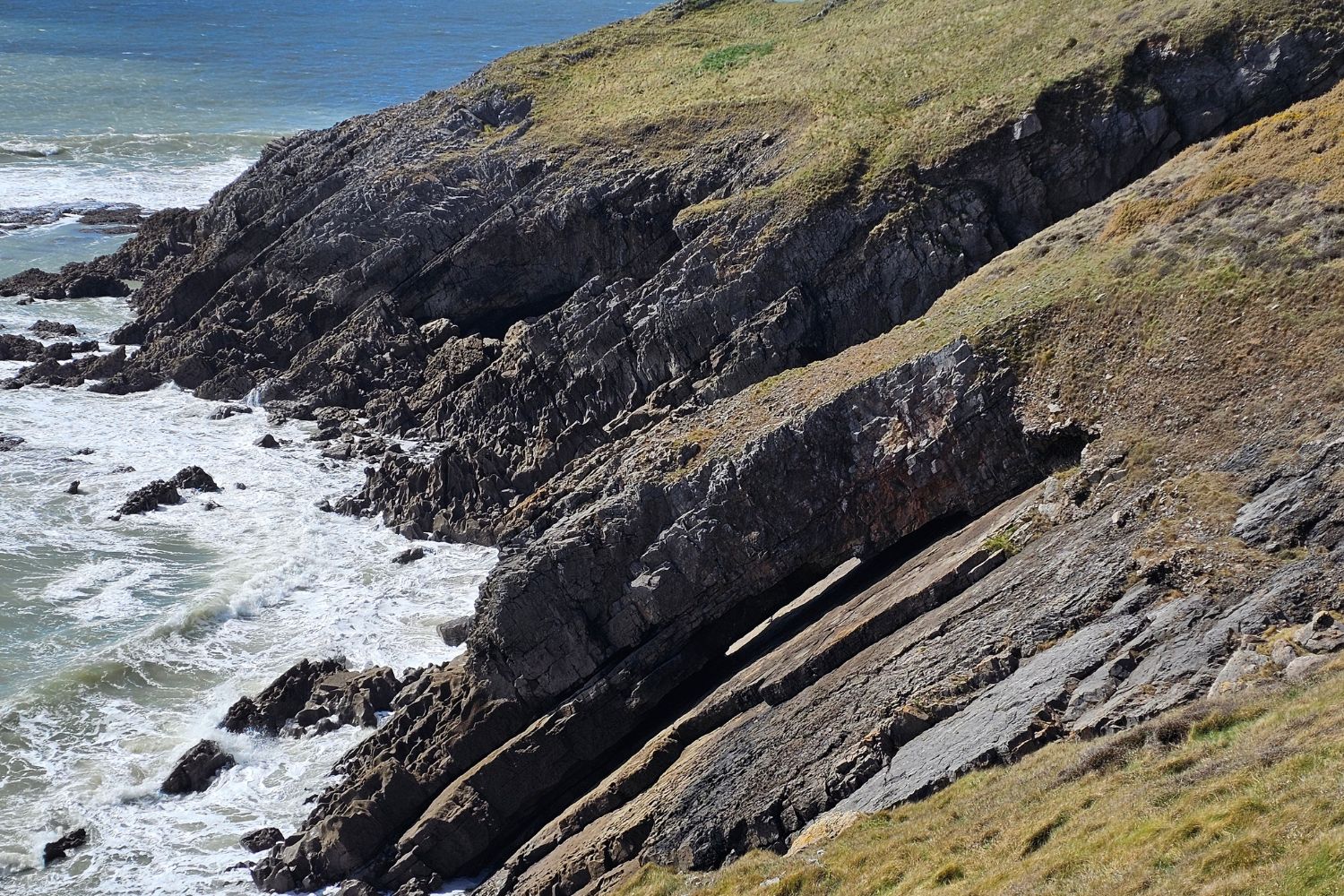
Soft Limestone and Erosion
As you continue toward Caswell, take a look at the rocks beneath the path. You’ll likely notice deep, dramatic gaps appearing in the stone.
It’s a fascinating bit of natural history: because the limestone is quite soft, it is highly susceptible to the Welsh elements. When the rock is weak at certain points, the constant, relentless force of the water and weather carves into it, creating those distinct gaps you see today. It’s a vivid reminder of how the very path you are walking on is constantly being reshaped by the sea.
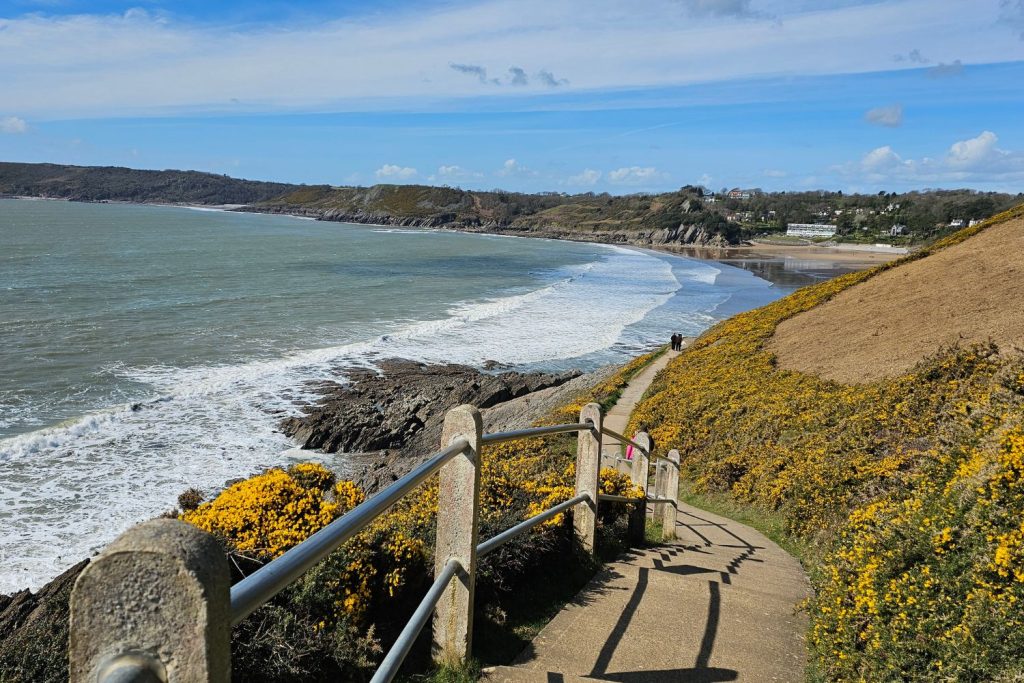
Navigating the Terrain to Caswell Bay
The easy promenade stroll soon gives way to a more traditional hiking experience as the path hugs the curves of the cliffs.
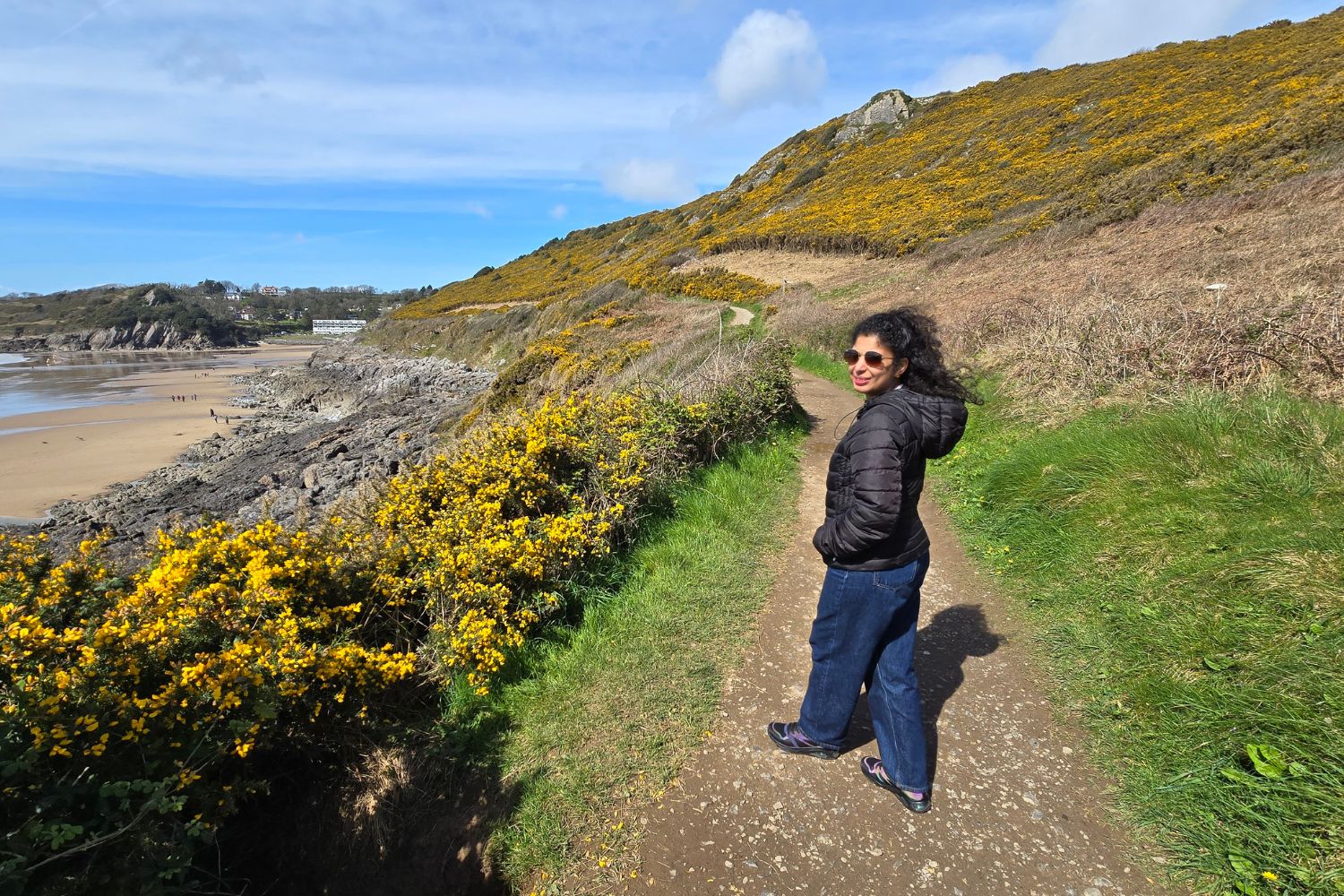
The Shift in the Pathway
You’ll notice a significant shift in the pathway as you leave Langland. While the first half remains very accessible and wheelchair-friendly, the terrain eventually becomes more adventurous. You will encounter a few sets of steps, and the walkway transitions into uneven, stony sections that require a bit more focus on your footing.
The Caswell Bay Bus Dilemma (A Must-Read!)
Once you reach Caswell Bay, be prepared for a digital “blackout”—we found there was absolutely no mobile network signal here.
A Lesson in Bus Timetables
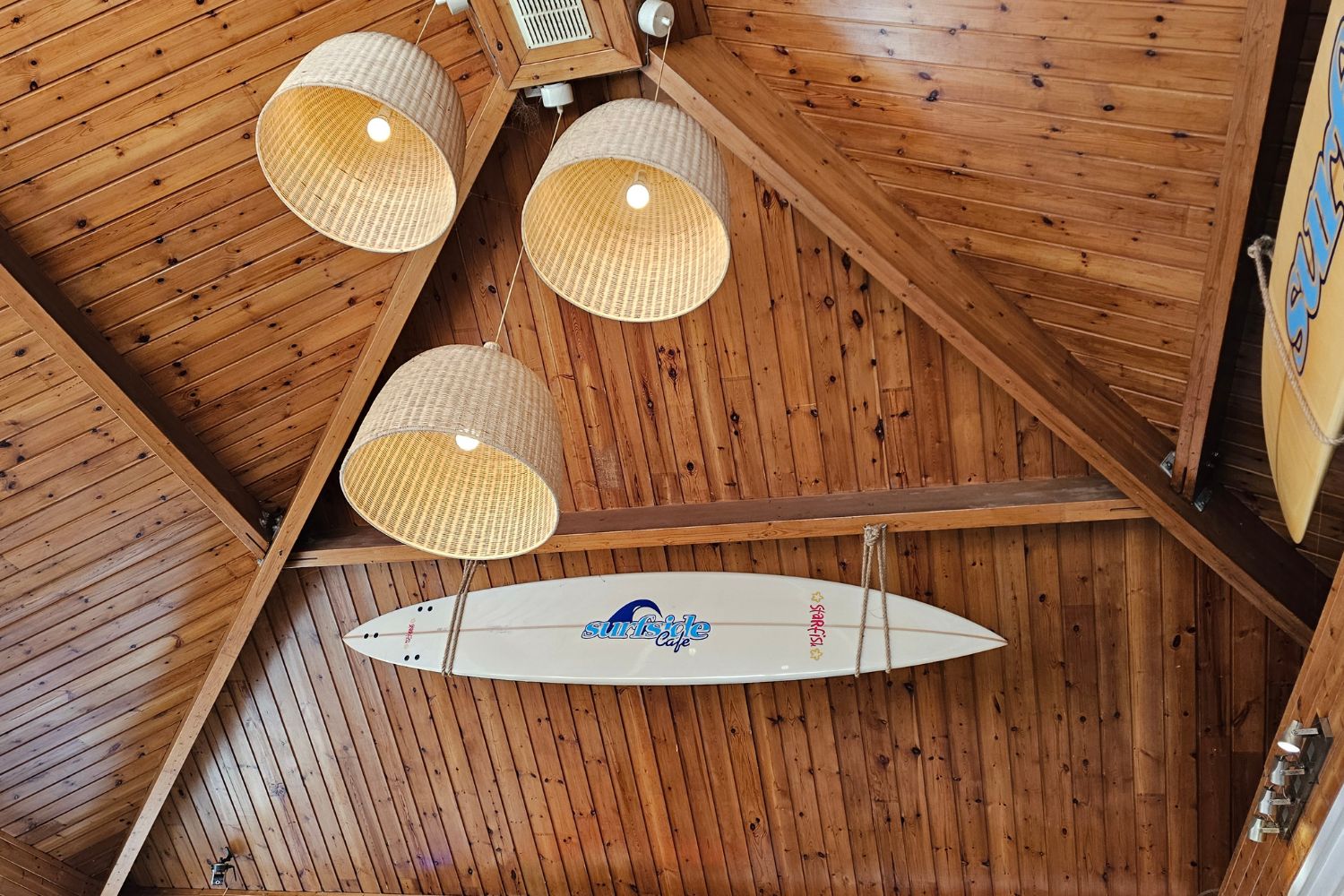
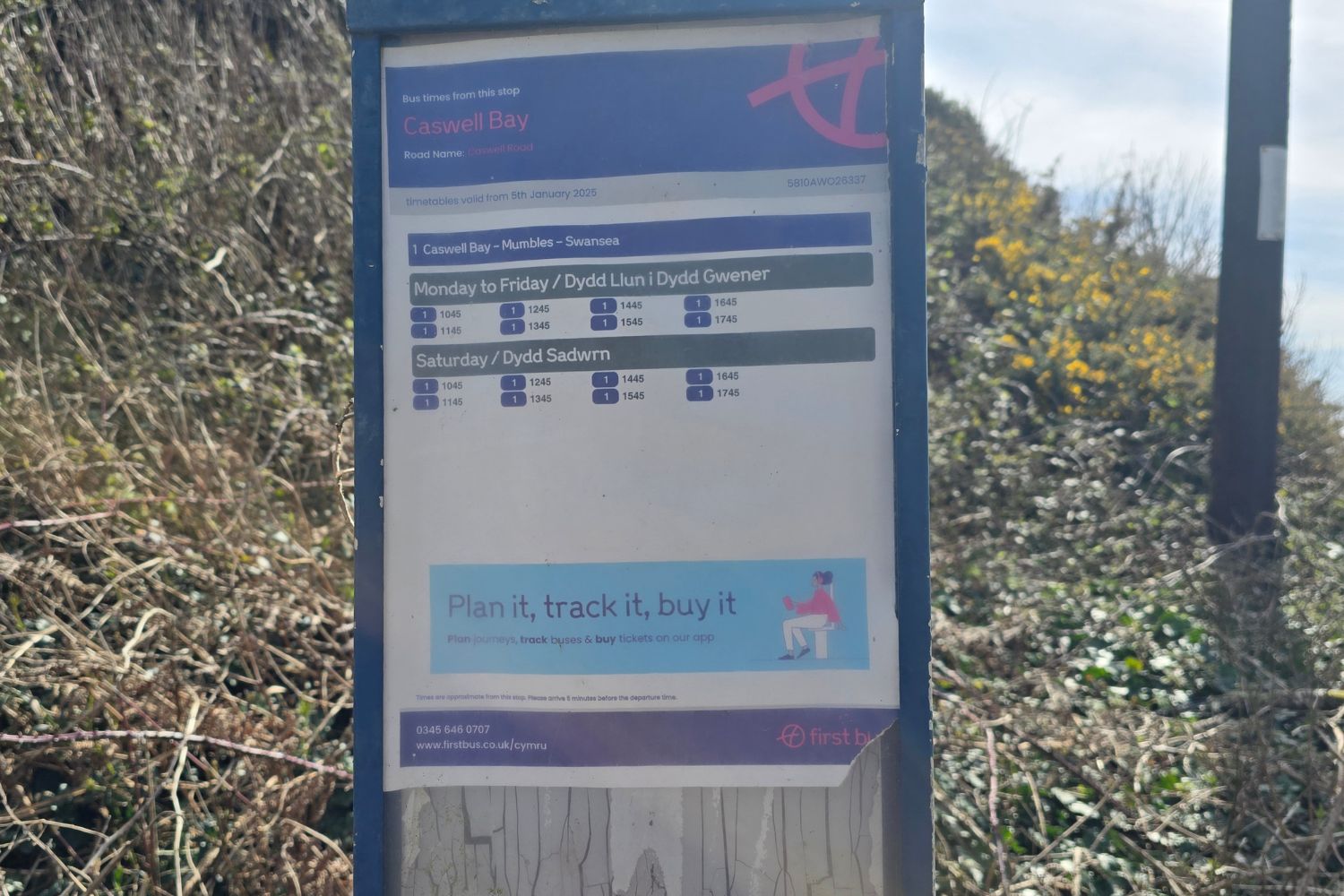
If you are planning to take the bus back, learn from our mystery! We stopped at the Surfside Cafe (the pesto, tomato, and cheese panini was a decent fuel-up, though nothing to write home about) and asked the staff for help. While they kindly found bus times for 3:00 PM and 4:00 PM online, the physical bus stop sign told a different story: no buses on Sundays.
We waited until 3:00 PM just in case, but the sign was right. If you find yourself here on a Sunday without a car, you have two main choices:
- The Backtrack: Walk back to Langland Bay. Unlike Caswell, Langland does have Sunday service at 3:00 PM and 4:00 PM.
- The Uphill Trek: Walk up the hill away from the beach until your signal returns to call for a taxi or a lift.
The Silver Lining: GG’s Gelato
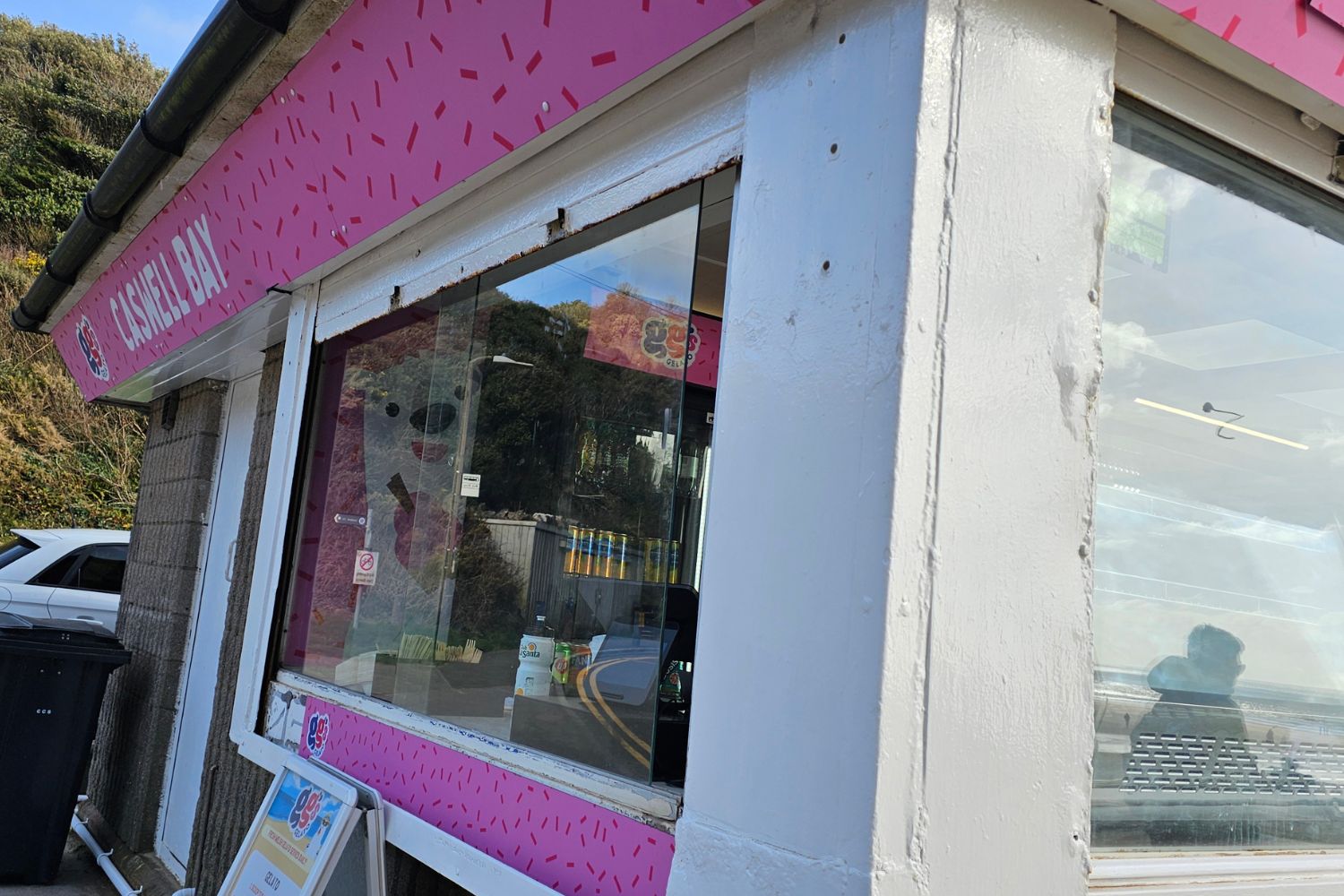
Since you might have a bit of a wait while your ride travels to meet you, do not miss GG’s Gelato. We grabbed a Honeycomb ice cream, and it was genuinely delicious. It truly seems that the rumours are true: all ice cream in Wales is the best!
Exploring the Shoreline at Caswell
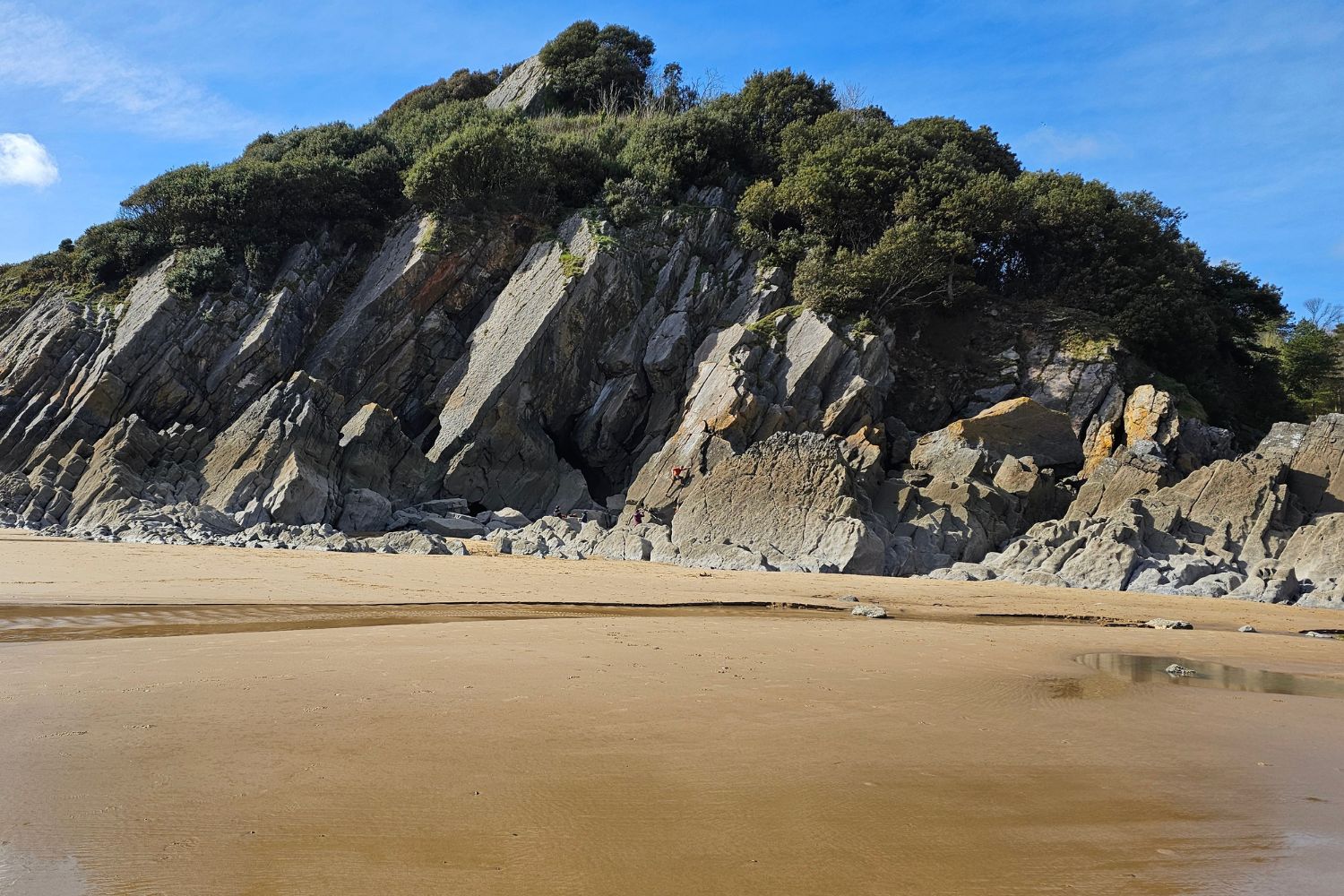
As you round the final bend of the cliff path, the expansive sands of Caswell Bay open up before you, offering a playground for all ages.
Caves, Cliffs, and Rivulets
Even as your walk concludes at Caswell Bay, the shoreline has plenty more to reveal. Massive cliffs wrap around the bay, hiding secret caves tucked between the hills. You’ll likely see a mix of adventurers here:
- The Climbers: Experienced explorers tackling the high, dramatic cliff faces.
- The Explorers: Children scaling the smaller rocky edges and investigating the little rivulets that run across the sand.
It’s a natural playground that feels worlds away from the city.
As you wander across the sand, keep an eye out for the small “rivulets.” These tiny streams drain constantly into the sea, keeping the beach wet and alive with flowing water.
Crossing the Water: If you need to cross these streams, we found it’s actually easier to walk closer to the sea. Although the water is more widespread there, the depth is much shallower, making it easier to keep your feet dry!
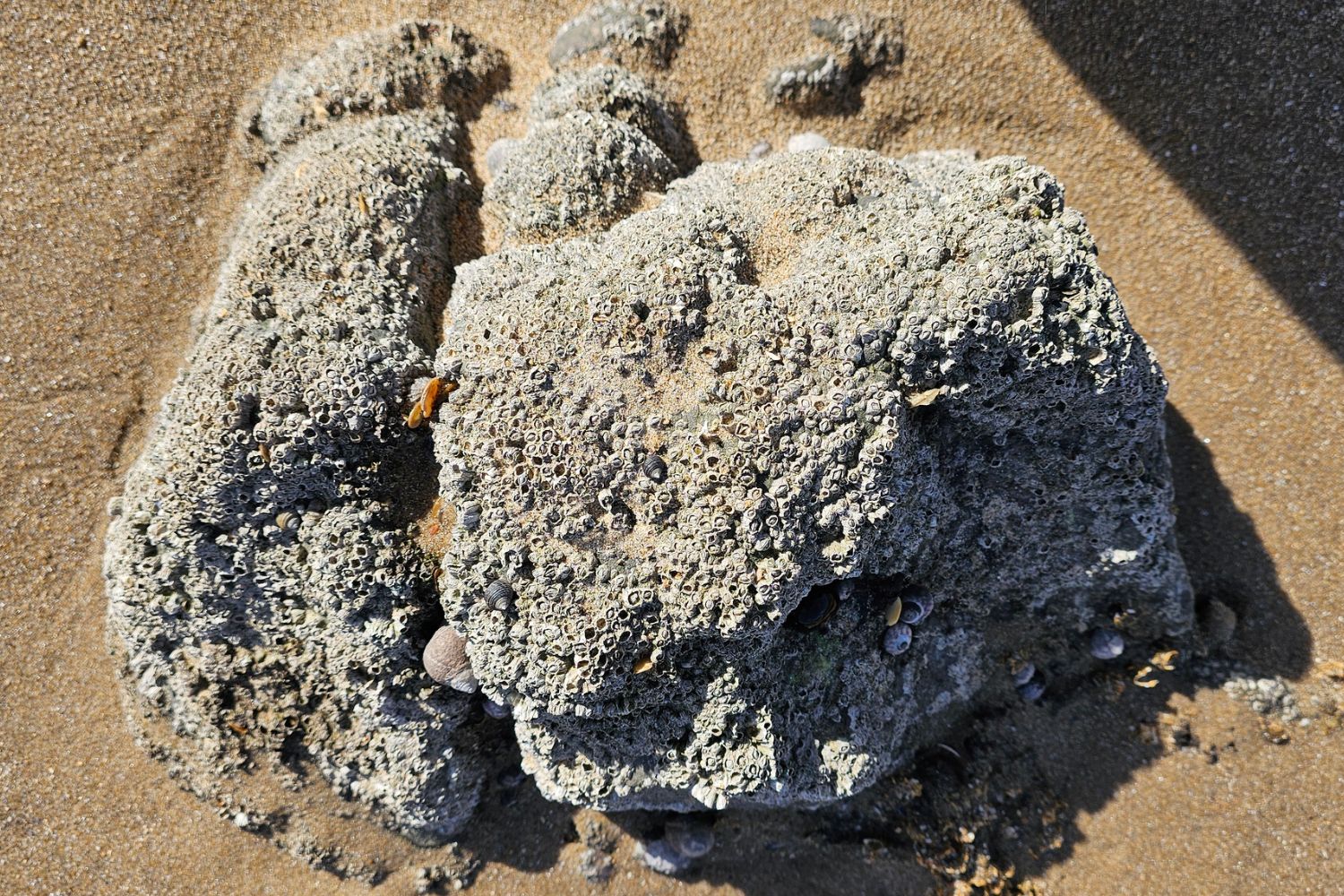
Barnacles and “Natural Armchairs”
The rocks at Caswell are a fascinating study in texture. As you explore, you’ll find many of them encrusted with barnacles. They look like millions of tiny, hardy shells crowded together, completely taking over the surface of the stone.
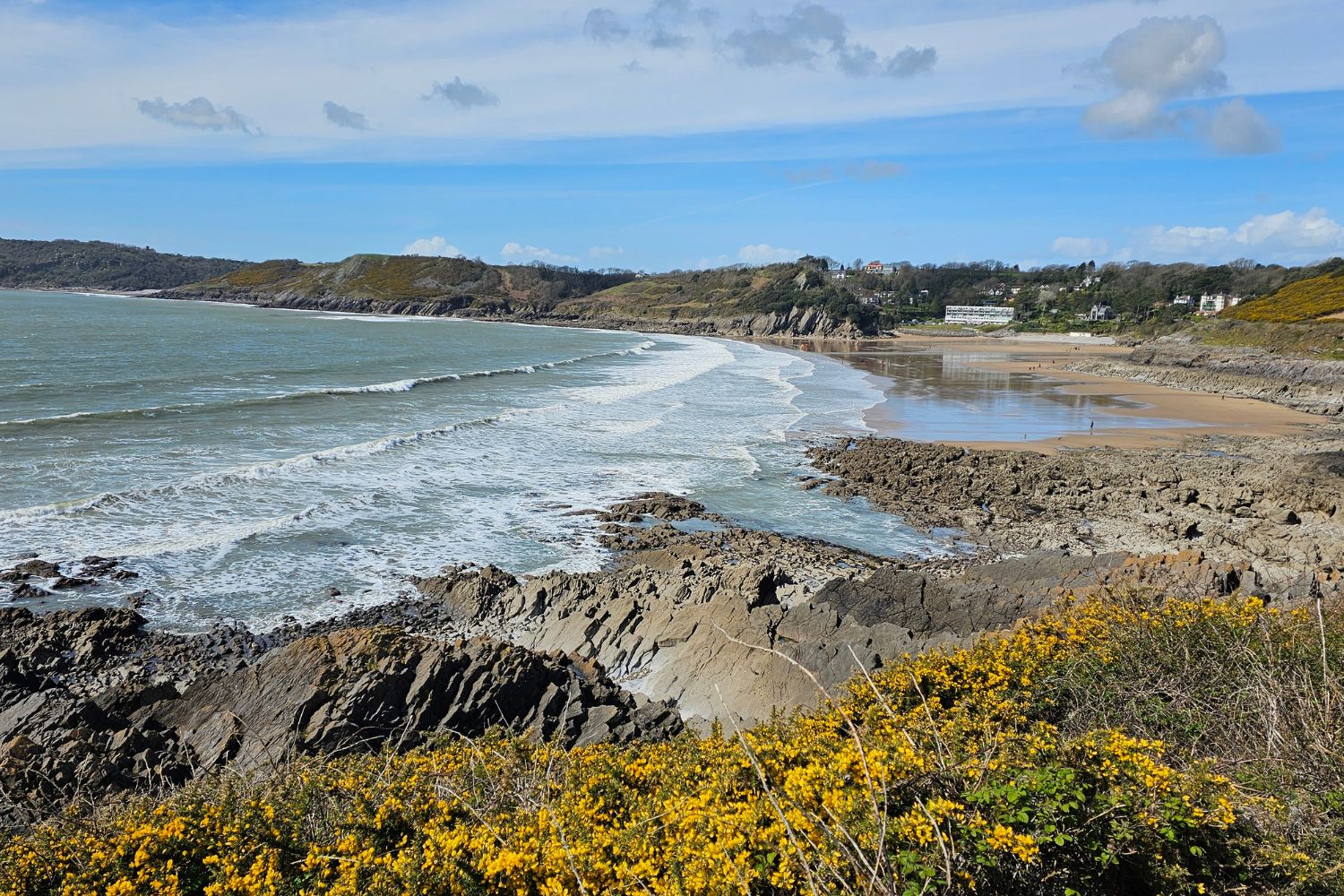
The rock formations themselves vary wildly thanks to the power of the sea:
- Nature’s Furniture: Look out for formations shaped uncannily like chairs.
- Erosion at Work: Some rocks have been perfectly smoothed out by the tide, feeling like polished stone under your hand.
A quick tip for you: While these “natural armchairs” look like the perfect photo op, keep in mind they are often wet from the tide or the rivulets, so they aren’t quite as suitable for a relaxing seat as they appear!
The Picturesque Finish
As you look back toward the land, the vibrant green trees clinging to the hillside give the local houses a stunning “coastal village” feel. Against the backdrop of the rugged Welsh coast, it makes the whole area feel incredibly picturesque—a perfect final view for your journey.
Look Closer: The Gower’s Local Residents
It’s easy to get lost in the grand coastal vistas, but the Gower is an Area of Outstanding Natural Beauty for its micro-details too. At Caswell Bay, take a second to look at the rivulets flowing across the sand—the rocks here are armour-plated with thousands of barnacles and tiny sea snails. As you climb toward the higher cliffs of Rhossili, the residents get larger. You’ll likely share the path with hardy Welsh sheep and the iconic wild ponies. They are remarkably unbothered by hikers, but keep a respectful distance—they’ve got the best grazing spots on the cliff for a reason!”
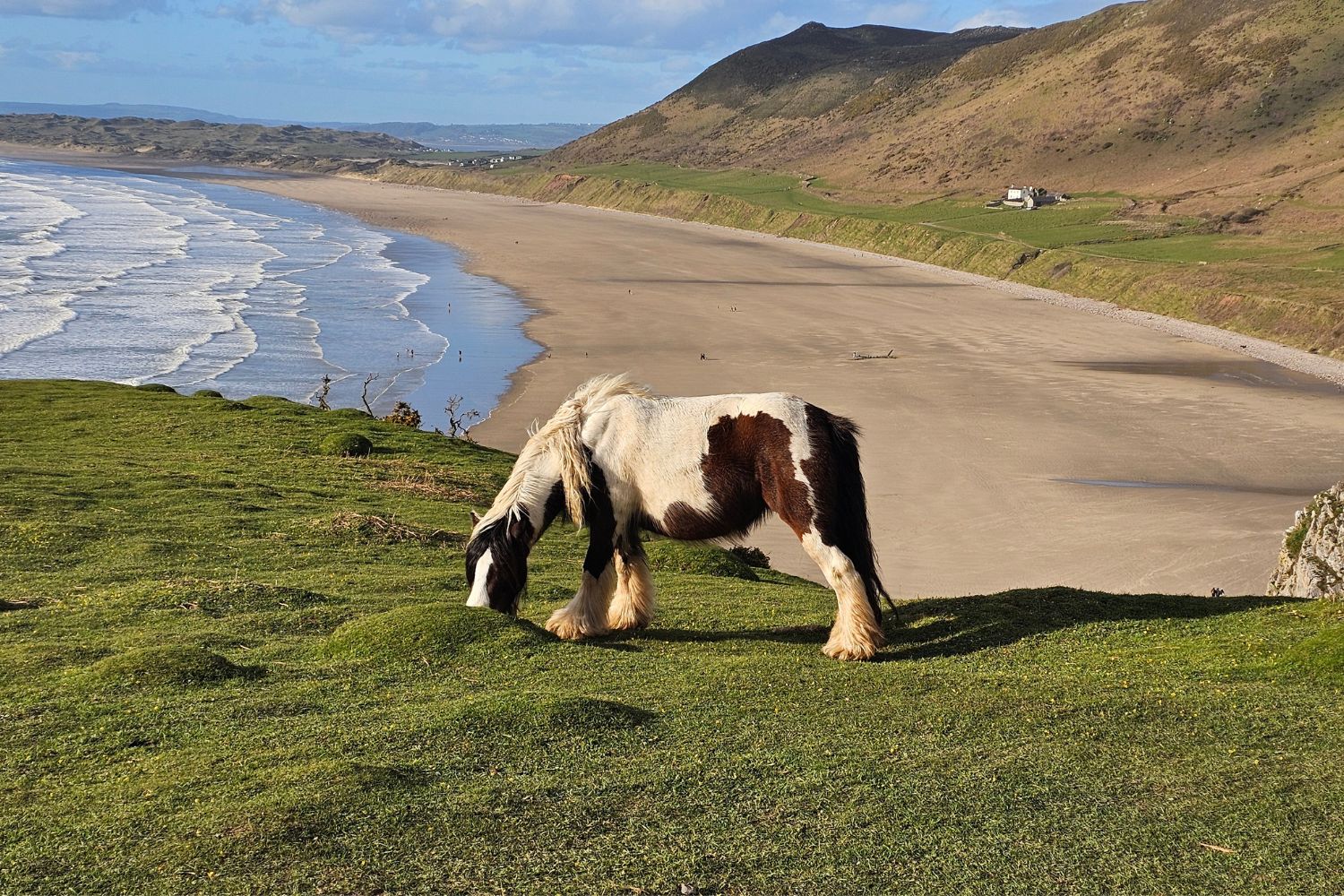
The Rhossili Bay Grand Finale
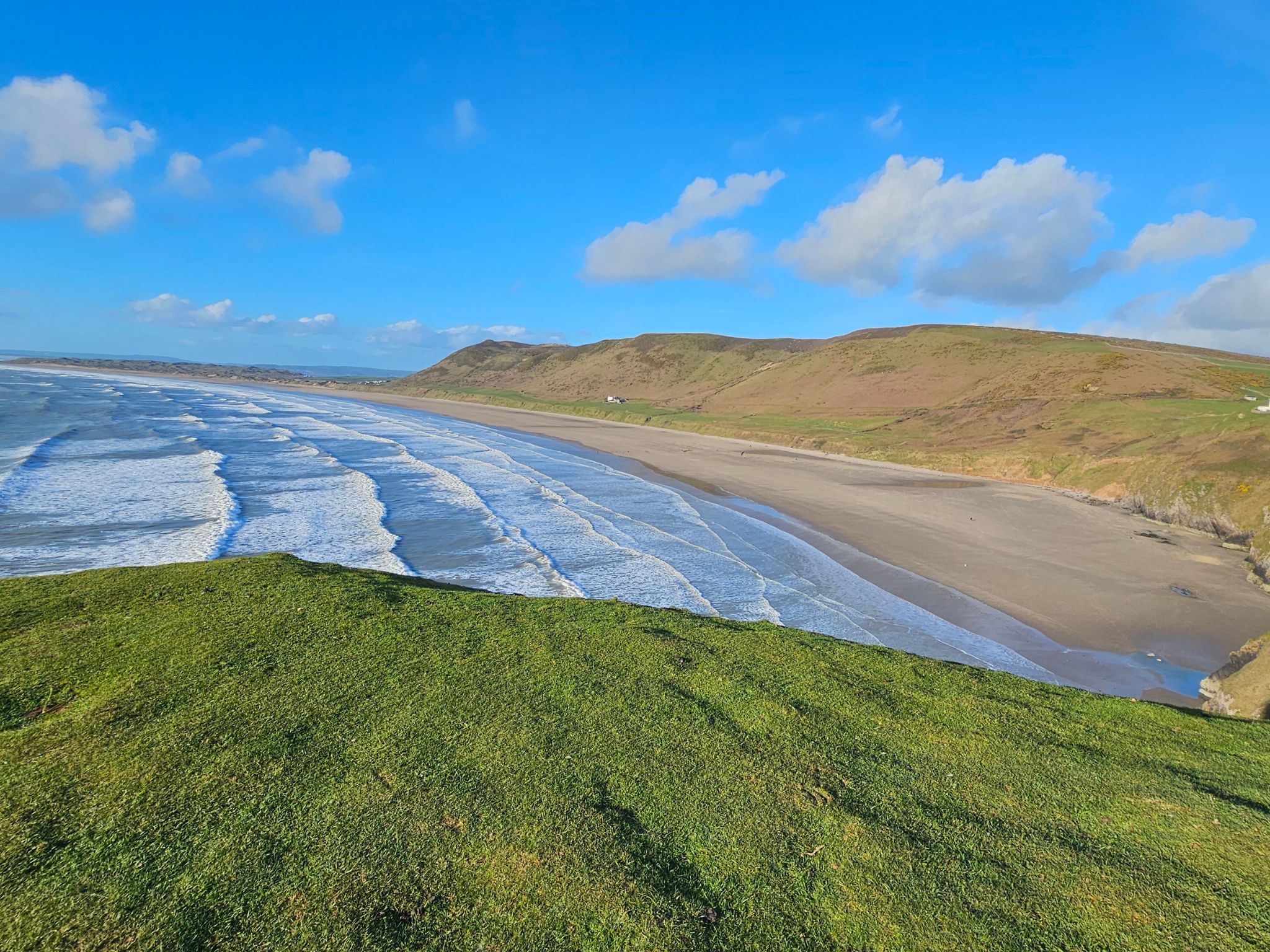
Later that afternoon, we took a 35-minute drive through rolling farmlands to reach Rhossili Bay. If you are visiting, you’ll find plenty of parking and public toilets available, making this world-class view very accessible.
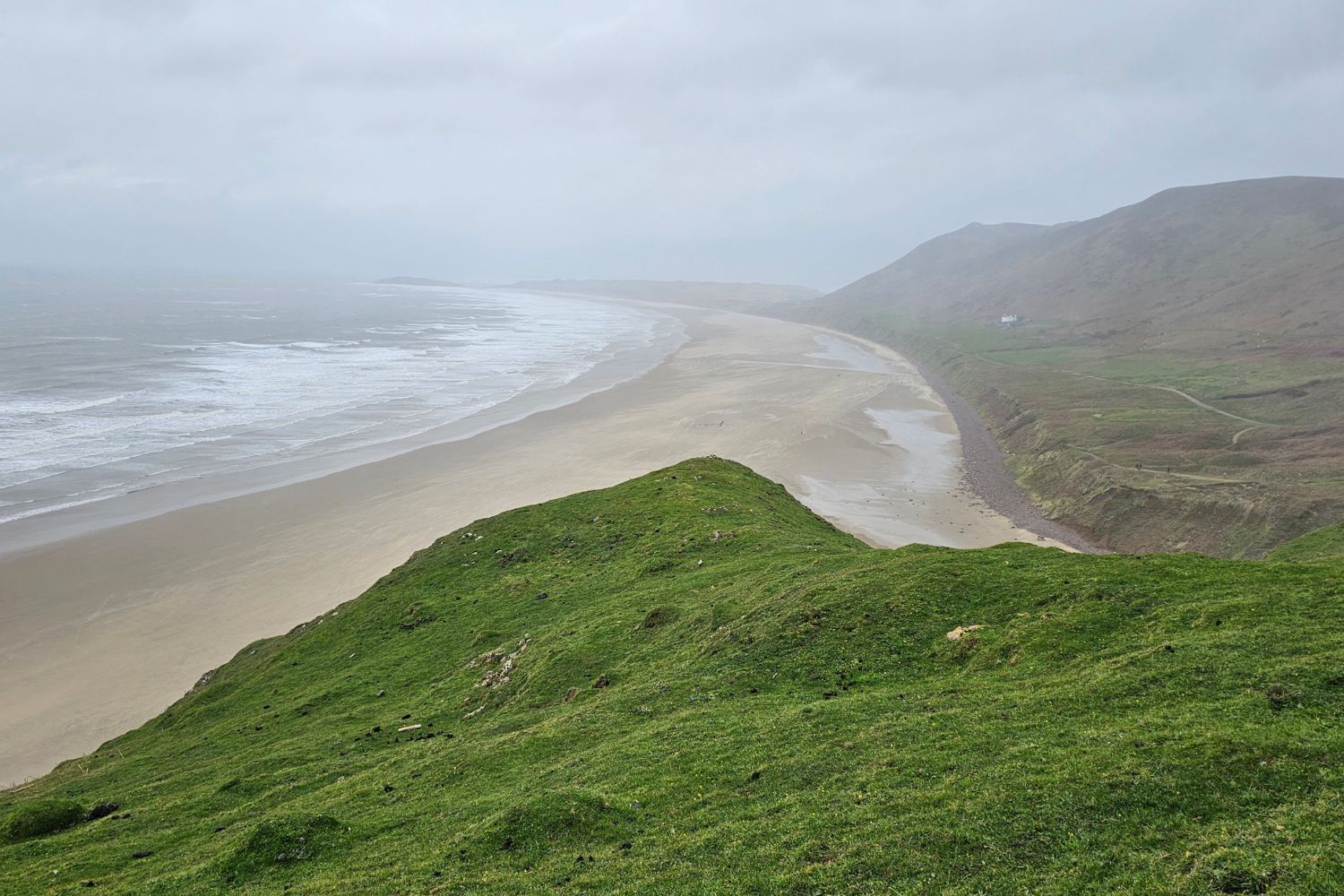
We had actually visited the day before during a storm, but seeing it in the bright sun is absolutely essential.
The Moon-Like Crescent Shoreline
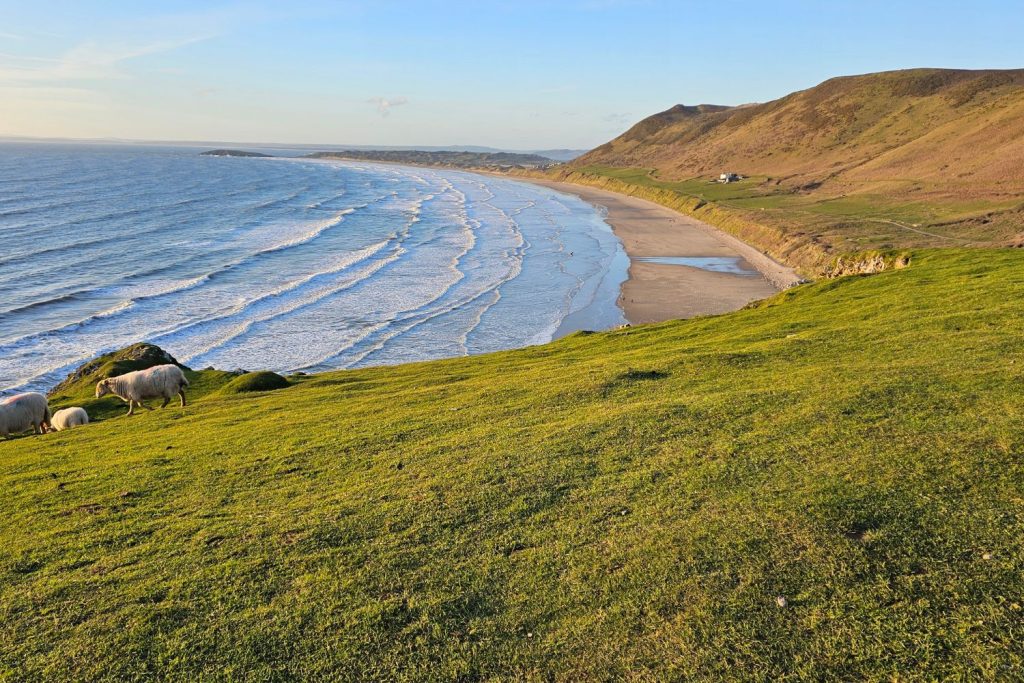
The shoreline here is a perfect crescent, and the beach itself follows this same sweeping shape. Much like the moon, the beach “crescent” changes size with the tide; as the water moves between high and low, you can actually observe the sandy curve expanding and shrinking right before your eyes.
Wildlife and Worm’s Head
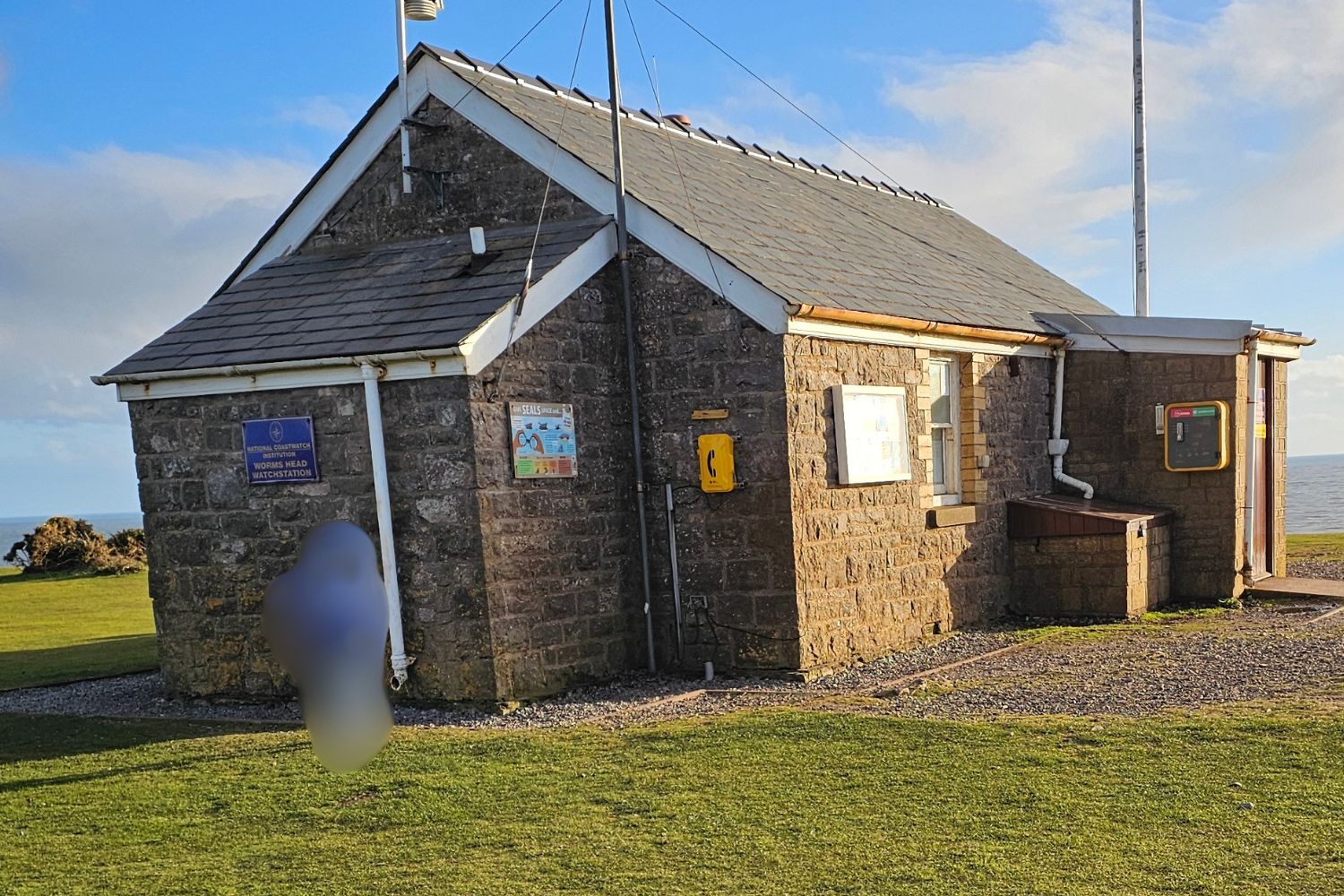
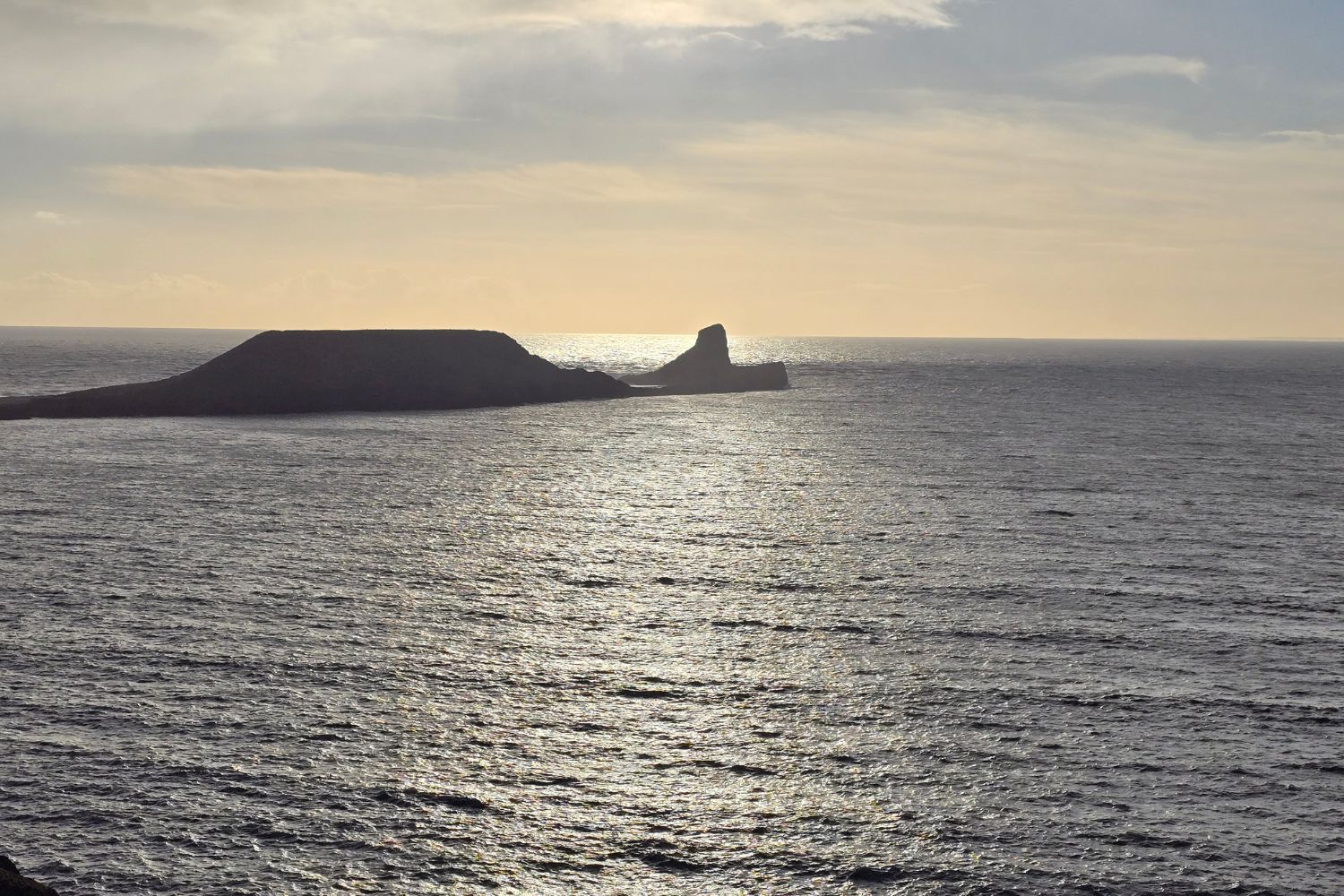
We walked toward the Worm’s Head station, and although the station and the path to the “Worm’s Head” itself were closed during our visit, the experience was still incredible.
You find yourself completely surrounded by:
- Crashing Blue Waves: Topped with bright white foam.
- Golden Sands: Stretching out as far as the eye can see.
- Verdant Cliffs: Where you can watch wild horses and sheep grazing peacefully right near the cliff edges
The Tidal Warning & Safety
As we reached the final stretch, the iconic silhouette of Worm’s Head dominated the horizon. But as the old saying goes: the sea waits for no one.
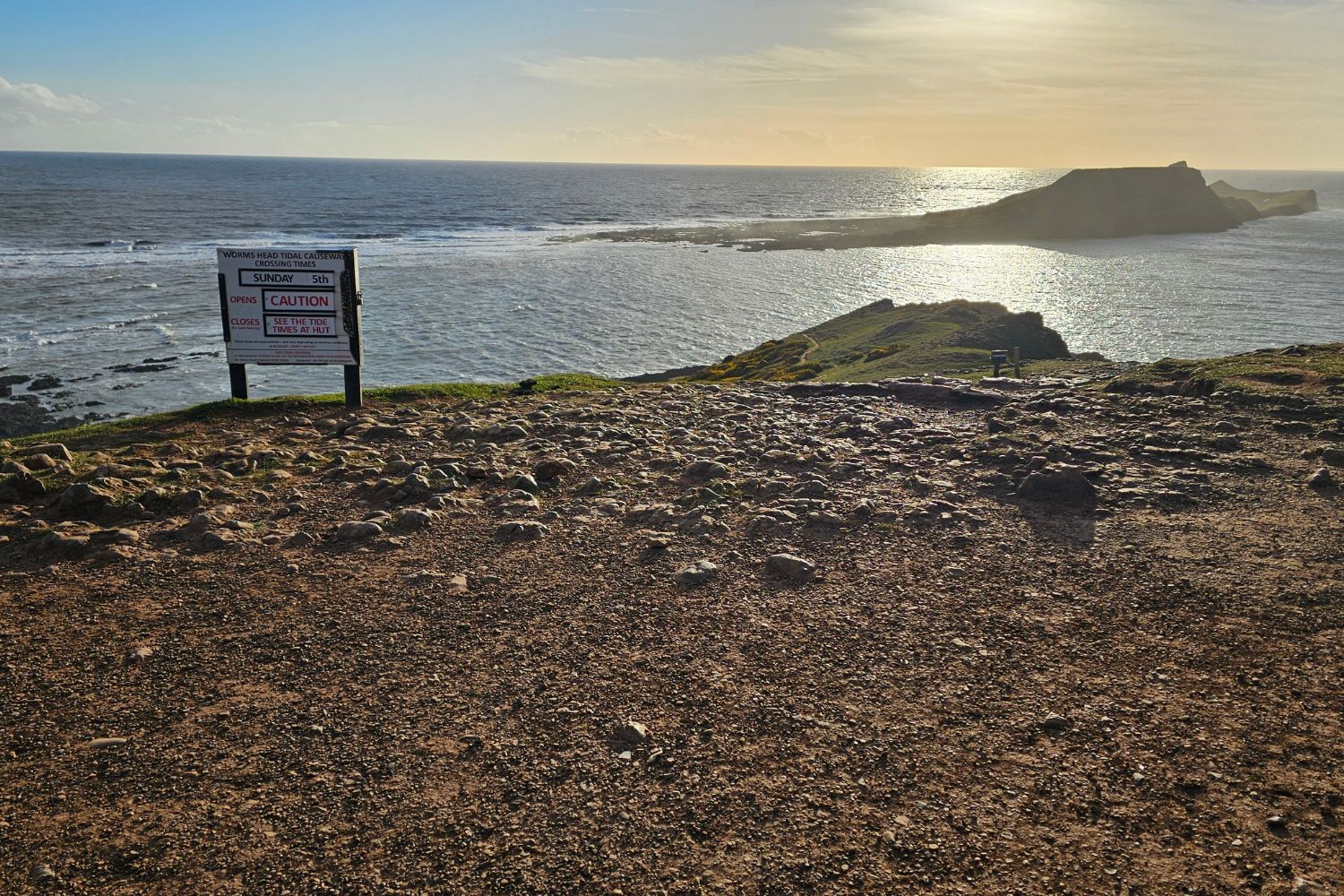
I captured this shot of the official crossing sign, which was a clear ‘No-Go’ for us. As you can see, the ‘CAUTION’ sign was out, and the causeway was already claimed by the tide. It’s a stark reminder of how vital it is to check the National Coastwatch Station (the stone building nearby) for safe crossing times. Getting stranded on the island is a common—and dangerous—mistake. We had to settle for the view from the mainland, but with a sunset like that, I wasn’t complaining!”
A New UK Favourite
This landscape may remind you of famous spots like the Seven Sisters, Land’s End, or Lulworth Cove, but it has officially become my new favourite spot in the UK. If you only have time for one stop on the Gower Peninsula, make it this one.
🚉 Explore South Wales by Train & Bus
Want to see more stunning South Wales scenery without the long hikes? Check out my 3-Day Scenic Itinerary for Non-Hikers—perfect for exploring by public transport!
The Iconic Three Cliffs: A Stargazer’s Dream and the Perfect Memento
On our previous day, we also made time for Three Cliffs Bay. If you are driving, you can park at the local Holiday Park and take an easy half-mile walk down to the main viewpoint. For your convenience, there are public toilets available near the parking area and the campsite shop.
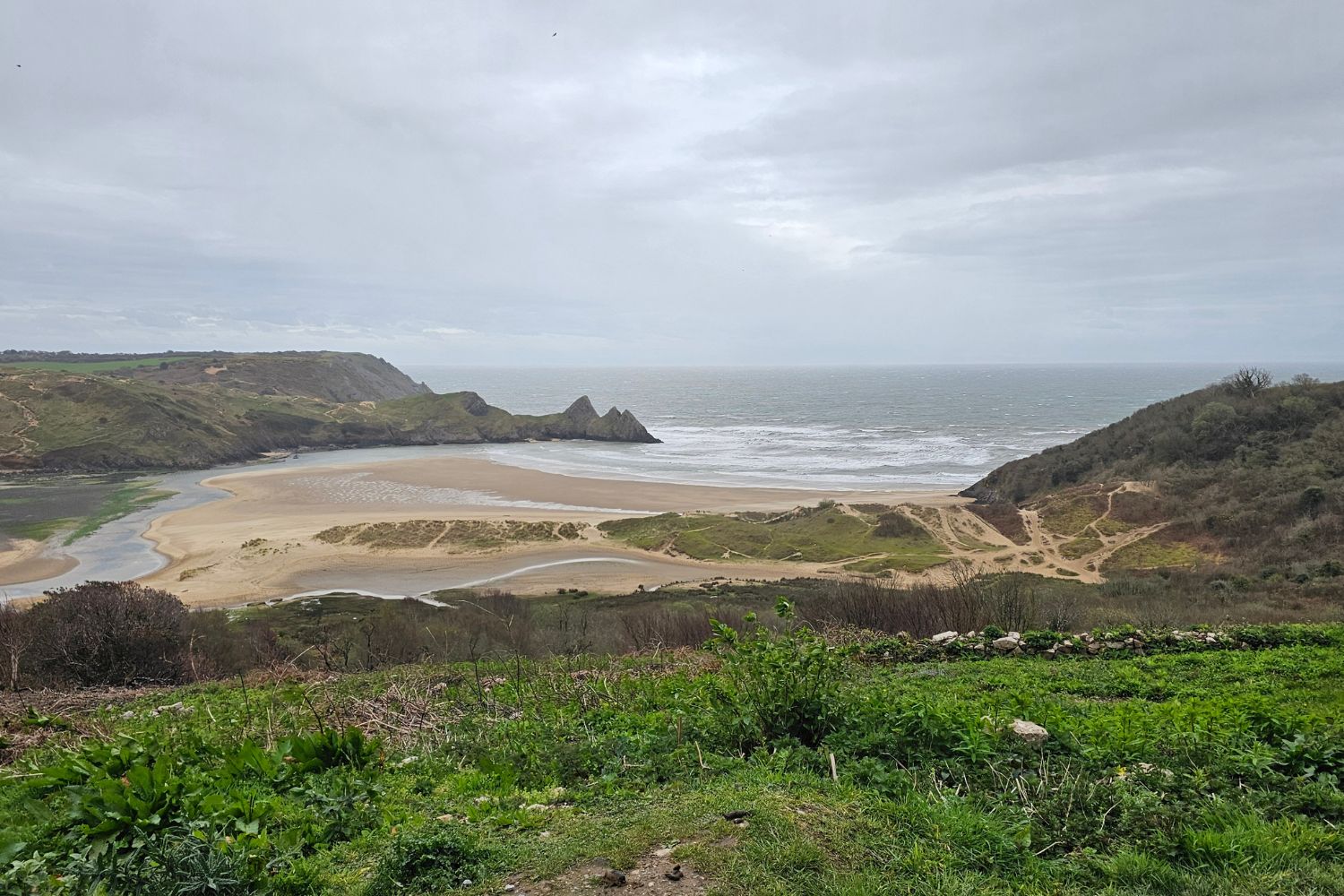
As the name suggests, you’ll see three distinct, jagged cliffs jutting out from the sea. It is a breath-taking sight, and I’ve heard that on a clear night, the lack of light pollution means you can see millions of stars here—making it a dream spot for any stargazers among you. Even on a moody, overcast day, Three Cliffs Bay looks like something out of a period drama.
Souvenirs and Seasonal Travel
The shop at the campsite is a great little find that doubles as a grocery and gift shop. We managed to pick up a South Wales puzzle there—the perfect memento to bring a piece of the coast back to your living room.
Planning Your Sunday Visit
If you are worried about the “Sunday Bus Dilemma” we faced at Caswell, here is a much safer tip for your future planning:
- Check the Seasonal Shift: Bus services to Rhossili and Three Cliffs Bay often increase during the “High Summer” months.
- Verify Sunday Service: During this peak period, Sunday and Bank Holiday buses are much more common. Always double-check the latest timetables on the First Bus or Adventure Travel websites before you set off to ensure you aren’t left waiting!
The Gower Essentials: Don’t Leave Without These
The Gower is beautiful, but its coastal microclimate and terrain require a bit of preparation. No matter what the weather looks like when you start, make sure these items are in your bag:
- Good Walking Shoes: You don’t necessarily need heavy hiking boots as the path isn’t overly uneven, but a pair of sturdy walking shoes with good grip is essential for the stony sections.
- Windbreaker (Windcheater): It is always windy on the clifftops, whether the sun is out or a storm is rolling in. On a sunny day, it keeps the chill off; on a stormy day, it is an absolute survival must.
- Sunscreen & Sunglasses: Don’t let the cool breeze fool you. The sun reflects intensely off the ocean, and it’s very easy to get burnt without realizing it until you’ve finished your 21,000 steps.
Conclusion
By the time we headed back to Swansea, we had clocked a staggering 21,000 steps. While we covered some of the most iconic spots the Gower has to offer, walking the entire Gower Coastal Path is a much bigger undertaking—the full route is approximately 50 miles and typically takes 4–5 days to complete.
We’ve only just scratched the surface of this incredible coastline, and we will definitely be returning to tackle the remaining sections. Whether you’re in it for a short stroll or a multi-day trek, one thing is certain: the Gower never fails to impress.
🥾 Craving More Mountains?
If the Gower coastline has you ready for your next peak, you need to try these 4 Stunning Day Hikes Near Cardiff.

